


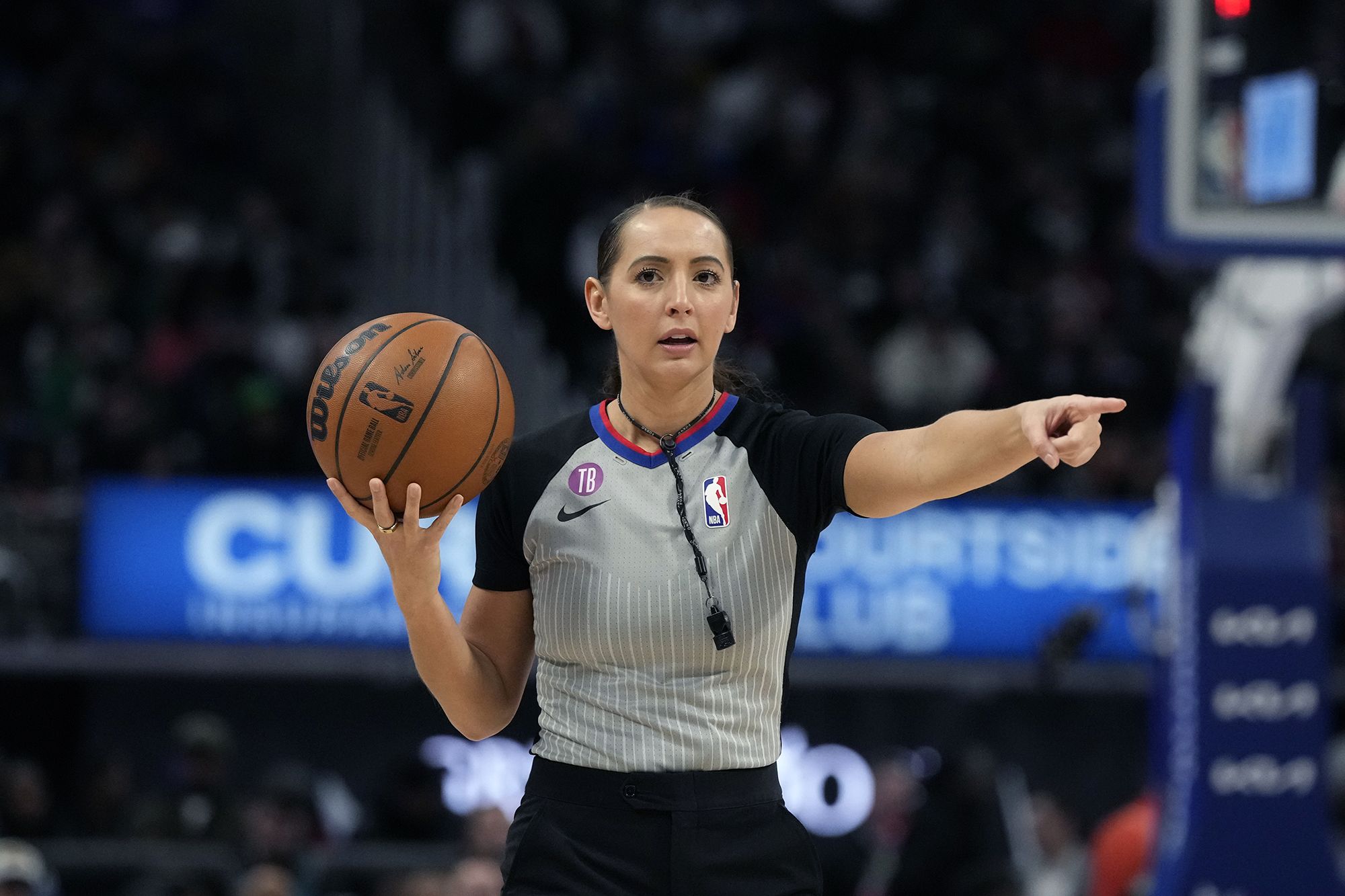
Ashley Moyer-Gleich: The Path of a Pioneer in NBA Officiating
The world of professional sports officiating is one of intense pressure, split-second decisions, and unparalleled scrutiny. For decades, it was a domain predominantly occupied by men. The journey of Ashley Moyer-Gleich represents a significant and inspiring shift in this landscape. As one of a select few women to achieve the status of a full-time NBA official, her career is not just a personal triumph but a narrative about breaking barriers, demonstrating elite competency, and reshaping the future of basketball officiating. Her story transcends the basic statistics of games worked; it’s a case study in resilience, skill development, and the evolving standards of a major professional league. This article provides a comprehensive exploration of Ashley Moyer-Gleich’s path, her technical mastery, her impact on the sport, and what her presence signals for the next generation.
Early Life and Formative Athletic Foundations
Long before she donned the official’s grey shirt, Ashley Moyer-Gleich was a dedicated athlete with a deep understanding of team sports from the inside. Her background is crucial to understanding her officiating style. She was a standout basketball player at Millersville University in Pennsylvania, where she played for the Marauders. This experience as a competitor provided her with an intrinsic feel for game flow, player mentality, and the physical and emotional rhythms of basketball that cannot be taught in a rulebook.
This player’s perspective became the bedrock of her officiating philosophy. It granted her empathy and a profound comprehension of the game’s speed and strategy. Transitioning from player to official is a path taken by many of the sport’s best referees, as it builds a natural authority and a credible voice on the court. For Ashley Moyer-Gleich, this foundation was the first step in a journey that would require her to see the game not through the lens of a participant, but through the objective, panoramic view required for impartial adjudication at the highest level.
The Grind: Climbing the Officiating Ladder
The road to the NBA is notoriously grueling and non-linear, a years-long audition across countless gyms. Ashley Moyer-Gleich began her officiating career in the high school ranks in Pennsylvania, honing her skills in often-chaotic environments. She then progressed to the collegiate level, working games in the NCAA Division I Atlantic 10 Conference. Each level presented new challenges: faster play, more sophisticated coaches, louder crowds, and increased media attention. This climb is a universal rite of passage, designed to test an official’s consistency, physical fitness, and mental fortitude.
Her talent and composure did not go unnoticed. In 2017, she entered the NBA’s pipeline, first working in the NBA G League, the league’s official developmental organization. This was her direct proving ground. The G League style mirrors the NBA’s athleticism and pace, serving as the ultimate training arena for officials. Success here requires mastering the NBA’s specific points of emphasis, its unique rules interpretations, and the management of world-class athletes. Her steady performance in this crucible demonstrated she possessed the requisite skill set for the final promotion.
Breaking Through: The NBA Call-Up and Historic Significance
The 2018-2019 NBA season marked a historic milestone when Ashley Moyer-Gleich earned her status as a full-time NBA staff official. This appointment placed her among a pioneering group of women, including trailblazers like Violet Palmer and Lauren Holtkamp-Sterling, who have steadily expanded the presence of female officials in the league. Her debut was not merely a ceremonial event; it was the culmination of a merit-based evaluation process. The NBA’s officiating program, led by Senior Vice President and Head of Referee Development and Training, Monty McCutchen, is intensely competitive, focusing solely on performance metrics, game management, and rule knowledge.
Her presence on the court carries symbolic weight, challenging long-held perceptions and inspiring young women and girls who aspire to careers in sports beyond playing. However, the true significance of her hiring lies in its normality. The league’s focus, and her own, is on excellence in execution. Every game she officiates reinforces the principle that capability, not gender, is the defining criterion for an NBA referee. This normalcy is the ultimate sign of progress in the integration of women into all facets of professional basketball operations.
Technical Officiating Style and On-Court Demeanor
Observers of Ashley Moyer-Gleich’s games consistently note her calm and communicative officiating style. In a profession where officials can be categorized as either “talkers” or “enforcers,” she leans toward the former. She frequently engages with players and coaches, offering brief explanations for calls or non-calls when the game flow allows. This proactive communication is a modern officiating best practice, helping to defuse tension and build a sense of collaborative game management rather than authoritarian decree.
Her physical positioning and movement are also hallmarks of her technique. She maintains excellent angles and spacing relative to the play, a fundamental yet challenging aspect of officiating that is drilled into officials at every level. This allows for clearer sightlines and more confident decisions. Furthermore, her demeanor under pressure—during crunch-time moments or after a controversial whistle—reflects a poised temperament. This combination of clear communication, superior mechanics, and emotional control forms the triad of a highly effective modern NBA official.
The Physical and Mental Rigors of an NBA Season
The NBA schedule is a marathon of travel, sleep deprivation, and constant performance review. An official like Ashley Moyer-Gleich may work 70 or more games per season, crisscrossing the country and dealing with fluctuating time zones and arenas. The physical demand is immense; referees are required to sprint up and down the court, mirroring the athletes, for 48 minutes while maintaining total cognitive focus. Their fitness is monitored, and their movement is analyzed via tracking data to ensure they are in the optimal position to make every call.
Mentally, the challenges are even greater. Every decision is dissected in real-time by thousands of fans, by expert broadcasters, and later by league evaluators. Social media can unleash a torrent of criticism over a single call. Developing a resilient mindset to compartmentalize noise, learn from errors, and approach each game with a clean slate is a non-negotiable skill. The ability to manage relationships with coaches and star players, who are masters of psychological gamesmanship, adds another complex layer to the mental toolkit required for survival and success at this level.
Training and Development Within the NBA System
Becoming an NBA referee is not the end of training; it is the beginning of a career-long development process. Ashley Moyer-Gleich is part of a sophisticated support system. The NBA Officiating Department employs a staff of former referees and technicians who review every single game. Officials receive detailed performance reports, grading them on the accuracy of calls, no-calls, and their overall game management. This feedback is relentless and granular, focusing on constant improvement rather than simple critique.
The league also hosts annual preseason clinics and mid-season seminars, bringing the entire officiating roster together for workshops on new rules, points of emphasis, and collaborative film study. These sessions foster a team culture among the officials. For Ashley Moyer-Gleich, this system provides a structured environment to refine her craft alongside her peers. It underscores that officiating is a profession of perpetual learning, where even the most experienced veterans must adapt to the ever-evolving style of play and league directives.
Public Perception and Media Navigation
The role of an official inherently places one in the crosshairs of public opinion. For female officials in a male-dominated sport, this scrutiny can be amplified with gendered undertones. Ashley Moyer-Gleich navigates this space with a clear, professional focus. She does not seek the spotlight, understanding that the best officiating is often the most invisible—a game smoothly managed where the focus remains on the players. Her media interactions are typically limited to pool reporter responsibilities after games, where she calmly explains rule interpretations on specific events as mandated by league protocol.
The discourse around her, however, is part of a larger cultural conversation. While the majority of coverage rightly focuses on her qualifications and performance, instances of biased criticism highlight the residual challenges women face in authoritative roles in sports. The NBA’s public support of its officials, and the growing respect she has earned from players and coaches over seasons of consistent work, serve as powerful counterpoints. Her career is gradually shifting perception through demonstrable competence.
Impact on the Next Generation of Officials
The visibility of Ashley Moyer-Gleich on national television broadcasts has a ripple effect far beyond the NBA hardwood. For a young girl attending a game or watching at home, seeing a woman in the official’s uniform presents a tangible career possibility that simply did not exist for previous generations. She serves as a role model not just for aspiring referees, but for all young women interested in sports analytics, coaching, front office work, or broadcasting. Representation in these roles validates aspiration.
This impact is actively cultivated through outreach. Many NBA officials, including Ashley Moyer-Gleich, participate in camps and clinics for young referees. At these events, she can share her journey, offer technical advice, and, most importantly, provide a living example of what is achievable. Her story demystifies the path and emphasizes the core requirements: a love for the game, a commitment to rules knowledge, physical fitness, and an unshakable work ethic. She is helping to build a broader, more diverse pipeline of talent for the future of officiating.
Comparative Analysis: The Evolution of Women in NBA Officiating
The inclusion of women in the NBA’s officiating ranks has been a gradual process, with each pioneer building upon the legacy of the last. The table below outlines key milestones and figures, contextualizing Ashley Moyer-Gleich’s place within this historic progression.
| Official & Tenure | Key Milestone & Role | Impact & Legacy |
|---|---|---|
| Violet Palmer (1997-2016) | First female full-time NBA referee (1997). Officiated over 900 regular-season games and 9 playoff games. | The ultimate trailblazer. Broke the gender barrier permanently, faced immense early scrutiny, and established a standard of toughness and longevity that proved women belonged. |
| Dee Kantner (1997-2002) | Hired alongside Palmer as one of the first two female full-time NBA referees. | Shared the immense pressure of being a “first.” Her career helped normalize the presence of women officials in the early, critical years of integration. |
| Lauren Holtkamp-Sterling (2014-Present) | Third female full-time NBA referee. Has officiated playoff games and the NBA All-Star Game. | Represented the next wave, entering the league after a longer officiating background. Her career focuses on technical excellence and deep integration into the officiating crew dynamic. |
| Ashley Moyer-Gleich (2018-Present) | Fourth female full-time NBA referee. Part of the modern, development-pathway generation of officials. | Represents the normalization of the development path (player → HS → college → G League → NBA). Her journey emphasizes a systematic, merit-based ascent that is becoming the standard. |
| Simone Jelks & Natalie Sago (Hired 2018-2020) | Part of a cohort of female officials hired around the same time, expanding the number of women on the roster. | Signifies the league’s commitment to expanding diversity not as a singular event, but as an ongoing recruitment and development priority, creating a critical mass. |
Notable Games and Career Highlights
While every game carries equal weight in the standings, certain assignments serve as markers of an official’s standing within the league’s hierarchy. Ashley Moyer-Gleich’s resume includes a steady accumulation of these significant contests. Being assigned to high-profile matchups between elite teams is a sign of trust from the league office. These games feature greater intensity, higher stakes, and more superstar talent, testing an official’s ability to manage the heightened environment without the game becoming about the officiating.
A major milestone in any official’s career is the first playoff assignment. Earning a spot in the postseason roster is a clear indicator that an official is considered among the top performers during the regular season. For Ashley Moyer-Gleich, her inclusion in the playoff rotation is a testament to her consistent performance and reliability under pressure. Each playoff game is a new level of scrutiny, but it is the ultimate validation of her skills and a crucial step in the career progression of any official aspiring to work the NBA Finals.
The Official-Player Dynamic in the Modern NBA
Managing relationships with players is one of the most nuanced aspects of NBA officiating. Today’s stars are powerful, savvy, and constantly testing boundaries. An official like Ashley Moyer-Gleich must establish her authority through consistency and respect, not through confrontation. This often involves brief, firm communication. As veteran referee and analyst Steve Javie once noted, the best officials manage the game through a combination of deep rule knowledge and emotional intelligence. A quote that encapsulates this philosophy comes from Monty McCutchen, the NBA’s head of referee development: “We are not managing games; we are managing relationships. The game is the byproduct of those relationships being healthy.” This insight is central to understanding the modern approach.
This relational approach is critical. Players quickly learn which officials are predictable in their rule application and which are communicative. By explaining a call when possible (“I had a kickball, number 5”) or even acknowledging a player’s complaint without changing the call (“I hear you, but I had it this way”), an official can maintain control without escalating conflict. For Ashley Moyer-Gleich, her background as a player likely provides an intuitive understanding of this dynamic, allowing her to navigate these high-stakes interactions effectively.
Common Misconceptions About NBA Officiating
Several persistent myths surround NBA officiating, often clouding public understanding of the profession. One major misconception is that officials have “make-up calls”—intentionally missing a call to compensate for a previous error. The NBA’s rigorous grading and evaluation system, which penalizes incorrect calls regardless of context, makes this highly unlikely as a deliberate strategy. Officials strive for call accuracy on every single play; perceived “make-up” sequences are usually coincidence or a referee’s subconscious recalibration of their focus.
Another common myth is that star players receive preferential treatment, or “superstar calls.” While stars often draw more fouls due to their aggressive, ball-dominant style of play, the league’s directive is to call the action objectively. The challenge for officials is that stars are frequently more skilled at drawing legal contact. The league’s Last Two Minute Reports, which publicly analyze officiating in close games, consistently show that missed calls affect all players. The narrative of bias is often more perception than reality, fueled by the heightened attention on every play involving a superstar.
The Future of Officiating and Technological Integration
The profession of officiating is on the cusp of significant technological transformation, and officials like Ashley Moyer-Gleich will need to adapt. Instant replay, now a cornerstone of the game, has already changed the job. Officials must be adept at managing the replay monitor, understanding definitive angles, and communicating final decisions clearly. The potential for expanded use of technology, such as automated out-of-bounds calls or even AI-assisted foul detection, looms on the horizon. This will not remove the human element but will redefine it.
Future officials may spend less time making initial judgment calls on certain black-and-white plays and more time managing the game’s flow, player interactions, and the application of nuanced rules like shooting fouls and blocks/charges that require human interpretation. The core skills of communication, court presence, and basketball IQ will become even more valuable. The ability to work collaboratively with technology, using it as a tool to achieve ultimate accuracy while maintaining the game’s human rhythm, will be the hallmark of the next generation of elite referees.
Conclusion: A Lasting Legacy in the Making
The career of Ashley Moyer-Gleich is a compelling chapter in the ongoing story of basketball. It is a narrative defined not by a single breakthrough moment, but by the steady, day-in, day-out excellence required to thrive in one of the most demanding jobs in sports. Her journey from collegiate athlete to NBA official maps a modern, merit-based pathway that is becoming the blueprint for success. She has navigated the immense physical and mental challenges of the profession while carrying the additional weight of being a visible pioneer, all with notable poise and professionalism.
Her ultimate legacy is twofold. First, it is one of quality and endurance, proving through hundreds of games that she belongs on the court based on skill alone. Second, and equally important, is her role in normalizing the presence of women at the highest levels of sports authority. With every whistle, she is not just officiating a game; she is quietly expanding the realm of possibility. As the NBA continues to evolve, officials like Ashley Moyer-Gleich will be central to maintaining the integrity, fairness, and future of the game they help govern.
Frequently Asked Questions About Ashley Moyer-Gleich
What is Ashley Moyer-Gleich’s background before the NBA?
Before becoming an NBA referee, Ashley Moyer-Gleich was a collegiate basketball player at Millersville University. She began her officiating career at the high school level in Pennsylvania, then moved up to work games in the NCAA’s Division I Atlantic 10 Conference. This traditional path provided the essential foundation in game management and rules application, which was further refined during her tenure in the NBA G League, the league’s official developmental organization for both players and officials.
How many female referees are currently in the NBA?
The number fluctuates slightly with hiring and retirements, but as of the recent seasons, there are several women serving as full-time NBA staff officials. Ashley Moyer-Gleich is part of this group, which includes contemporaries like Lauren Holtkamp-Sterling, Simone Jelks, and Natalie Sago. The NBA has been intentionally expanding its pipeline to recruit and develop more female officials, seeing diversity as a strength that enhances the officiating corps’s overall quality and perspective.
What was a significant milestone in Ashley Moyer-Gleich’s NBA career?
A key milestone for any NBA official is earning playoff assignments, which are reserved for the highest-graded performers during the regular season. Ashley Moyer-Gleich achieving this status is a significant professional benchmark. It signals that the league office and her evaluators have full confidence in her ability to manage the increased intensity and scrutiny of postseason basketball, marking her as one of the top officials in the league.
How does the NBA train and evaluate its referees like Ashley Moyer-Gleich?
The NBA has a comprehensive, continuous training and evaluation system. Officials like Ashley Moyer-Gleich receive detailed performance reports after every game, grading their call accuracy, positioning, and game management. They participate in annual preseason clinics, mid-season seminars, and undergo constant video review with trainers, many of whom are former referees. This system focuses on relentless feedback and improvement, ensuring officials adapt to new rules and points of emphasis each season.
Why is the presence of officials like Ashley Moyer-Gleich important for the sport?
The presence of officials like Ashley Moyer-Gleich is important for both symbolic and practical reasons. Symbolically, it breaks down outdated barriers and provides visible role models, showing young women that careers in sports leadership are attainable. Practically, it broadens the talent pool from which the league can draw, ensuring the best possible officials are on the court. Diversity of background and experience strengthens the officiating crew’s ability to understand and manage the modern game effectively.
