


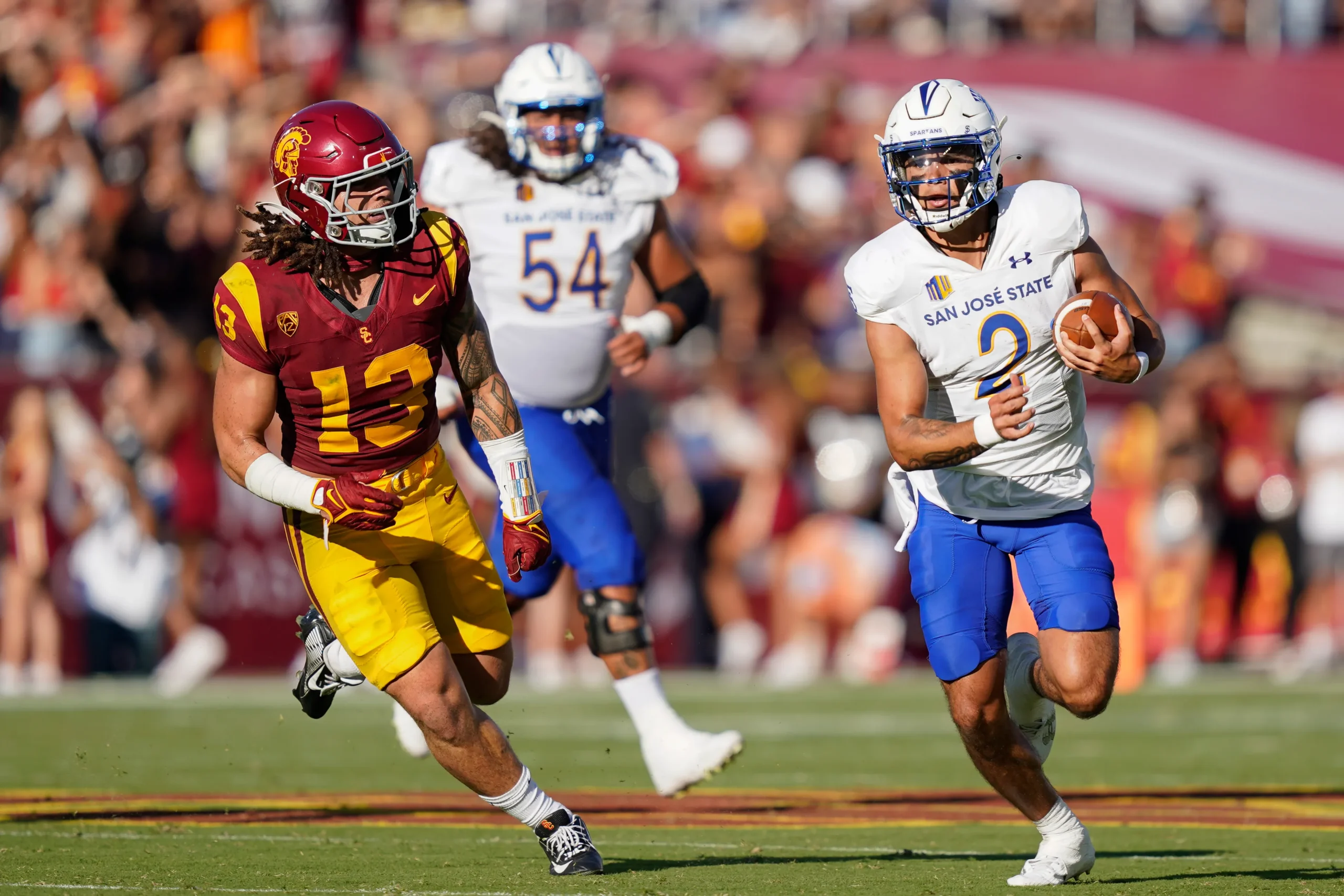
Cal vs USC: A Rivalry Forged in Gold, Blue, and Cardinal
The clash between the California Golden Bears and the USC Trojans is more than just a football game; it’s a West Coast institution. For over a century, this rivalry has defined seasons, launched legends, and created moments etched permanently in collegiate lore. It’s a confrontation of contrasting identities—the cerebral, revolutionary spirit of Berkeley against the glamorous, Hollywood-powered machine of Los Angeles. When the Golden Bears and Trojans take the field, it’s not merely for points on a scoreboard, but for pride, for history, and for a claim to California’s football soul. This is the definitive story of the Cal vs USC rivalry, exploring its deep roots, its unforgettable characters, and its thrillingly uncertain future.
The Genesis of a Coastline Conflict
The first meeting between the University of California, Berkeley and the University of Southern California took place in 1915, a 28-10 victory for the Golden Bears that set the stage for over a century of competition. In these early days, Cal was the established power, a founding member of the Pacific Coast Conference, while USC was the upstart from the south, eager to prove its mettle. The geographical divide instantly created a natural rivalry, pitting Northern against Southern California in a battle for state supremacy that extended far beyond the football field.
This foundational period was defined by a stark power imbalance, with Cal often getting the better of the Trojans. The rivalry’s intensity, however, was never in doubt. Each game was a referendum on regional pride, drawing massive crowds and capturing the attention of the entire state. These early contests laid the essential groundwork, establishing the traditions and the competitive fire that would make the Cal vs USC matchup a perennial highlight of the college football calendar.
The Coaching Titans
No discussion of this rivalry is complete without the legendary figures who stalked the sidelines. For Cal, the immortal Pappy Waldron and later, the innovative Jeff Tedford, became icons by masterminding victories over the Trojans. Waldron’s teams in the mid-20th century were known for their toughness and tactical brilliance, often serving as a formidable obstacle for USC’s ambitions. Their leadership embedded a belief in the Berkeley program that they could compete with anyone, even the giants from Los Angeles.
On the other side, USC boasts a veritable Mount Rushmore of coaching legends who have left an indelible mark on the rivalry. From Howard Jones and John McKay to Pete Carroll, these men built dynasties. Their teams, often stocked with future NFL Hall of Famers, were the gold standard of college football. The chess match between a disciplined Cal coach and a superstar-driven USC system has always been a central narrative, with the strategic battle on the sidelines often being as compelling as the physical one on the field.
The Game of the Century
The 2004 showdown in Los Angeles Memorial Coliseum stands not just as the greatest game in the Cal vs USC rivalry, but as one of the most iconic contests in college football history. The top-ranked, defending national champion Trojans, led by Matt Leinart and Reggie Bush, were riding a 22-game winning streak and were heavy favorites. Cal, ranked seventh and quarterbacked by the dynamic Aaron Rodgers, arrived as the most credible threat to USC’s reign. The stage was set for an epic, nationally televised clash with BCS implications on the line.
What followed was a breathtaking display of offensive precision and defensive grit. Aaron Rodgers put on a passing clinic, completing his first 23 attempts—an NCAA record. Despite his historic accuracy, the Cal offense was repeatedly held to field goals in the red zone. In the final moments, with a chance to take the lead, Cal’s last-gasp drive fell short, and USC escaped with a 23-17 victory. The game, a nail-biting thriller decided by the slimmest of margins, cemented the rivalry’s reputation for delivering high-stakes drama and cemented the legacy of both Rodgers and the unbeaten Trojans.
Legends in Blue and Gold
The California side of the rivalry has been defined by players whose talent and tenacity made them Trojan-killers. From the quarterback wizardry of Aaron Rodgers and the elusive running of Marshawn Lynch to the defensive dominance of players like Tyson Alualu, Cal has never been short on stars who rose to the occasion. These athletes embodied the “Bear Raid” spirit—a combination of underdog grit and explosive playmaking that could unravel even the most talented USC squads.
These players are revered in Berkeley not just for their statistics, but for their moments of triumph against the cardinal and gold. A game-breaking run by Lynch or a perfectly threaded pass from Rodgers against USC became instant legend, celebrated for generations. They proved that while USC might often have more blue-chip recruits, Cal could develop and deploy transcendent talent capable of winning any single game, a truth that has always been the lifeblood of the Cal vs USC rivalry.
Trojan War Gods
USC’s contribution to the rivalry’s lore is a parade of college football royalty, a testament to its status as “Tailback U” and “Quarterback U.” Names like O.J. Simpson, who carved up defenses with breathtaking power, and Matt Leinart, the Heisman-winning field general, are central characters in this story. More recently, stars like Reggie Bush and quarterback Caleb Williams have continued the tradition of jaw-dropping athleticism that defines the Trojan brand on the national stage.
These players often arrived in Los Angeles with immense hype and consistently delivered on the biggest stages, including against Cal. A long, game-sealing touchdown run by Simpson or a Heisman-highlight reel play from Bush against the Golden Bears are foundational moments in the USC legend. Their individual brilliance has been a constant challenge for Cal, forcing the Bears to concoct near-perfect game plans to have a chance at an upset, thus elevating the overall quality and spectacle of every Cal vs USC encounter.
Clash of Campus Cultures
The cultural dichotomy between Berkeley and USC is a core element of the rivalry’s identity. The University of California, Berkeley is globally renowned as a bastion of academic rigor, political activism, and counter-cultural thought. The campus vibe is fiercely intellectual, non-conformist, and proudly public. This identity translates to a fanbase and football program that embraces the underdog role, valuing innovation and disruptive spirit over traditional pomp and circumstance.
In stark contrast, the University of Southern California resides in the heart of Los Angeles, with a culture deeply intertwined with the glamour, networking, and star power of Hollywood. It’s a private institution where the lines between athletics, entertainment, and business are often blurred. The Trojan brand is one of showmanship, legacy, and a confident expectation of victory. This fundamental clash—the cerebral, revolutionary North versus the sunny, superstar South—adds a rich, sociological layer to every Cal vs USC matchup that few other rivalries can claim.
Memorial Stadium vs The Coliseum
The hallowed grounds where this rivalry plays out are monuments to college football history. California Memorial Stadium, nestled in the Berkeley hills with the stunning San Francisco Bay as a backdrop, is an intimate and scenic venue. Its tight confines and often-raucous student section create a distinct home-field advantage. The stadium itself, built as a memorial to Californians who served in World War I, carries a profound sense of history and tradition that resonates on game days.
The Los Angeles Memorial Coliseum, a venue that has hosted two Olympic Games, is a sprawling historic landmark. Its iconic peristyle end and vast seating capacity create an atmosphere of grandeur and spectacle. For a visiting team, walking into the Coliseum against a charged-up Trojan crowd is a daunting task. The contrast between the picturesque, academic setting of Berkeley and the monumental, urban stage of Los Angeles perfectly mirrors the cultural differences that make the Cal vs USC rivalry so compelling.
What Is QBR In Football? The Ultimate Guide To Understanding Quarterback Rating
Statistical Tapestry
The history of Cal vs USC is written in numbers that tell a story of dominance, streaks, and surprising upsets. USC undeniably holds the upper hand in the all-time series, a reflection of its prolonged periods of national prominence. The Trojans have enjoyed lengthy winning streaks, sometimes spanning a decade or more, which have often defined eras of the rivalry. These stretches of dominance have created a persistent narrative of David versus Goliath, making Cal’s victories all the more sweet and significant for the Berkeley faithful.
Yet, the statistics also reveal Cal’s capacity to play the spoiler. The Bears have pulled off some of the most shocking upsets in the series, often when USC was ranked highly and chasing national championship dreams. These games are pivotal moments that reset expectations and prove the unpredictable nature of the rivalry. While the overall win-loss record may lean heavily one way, the story within the numbers is one of dramatic fluctuation, where any given Saturday can produce a result that echoes for years.
| Rivalry Dimension | California Golden Bears | USC Trojans |
|---|---|---|
| All-Time Series Record | Trails significantly, but with iconic upset victories | Leads by a wide margin, with several long winning streaks |
| Program Identity | The Innovator & Underdog; “Bear Raid” offense | The Blue-Blood Dynasty; “Tailback U” & Hollywood’s Team |
| Iconic Game | The near-upset in the 2004 “Game of the Century” | Victory in the 2004 classic to preserve a national title run |
| Legendary Player | Aaron Rodgers (QB) – Record 23 straight completions in 2004 | Reggie Bush (RB) – Heisman winner and offensive weapon |
| Home Stadium | California Memorial Stadium (Berkeley hills, scenic) | Los Angeles Memorial Coliseum (Historic, monumental) |
| Cultural Vibe | Academic, activist, counter-cultural, public institution | Glamorous, networked, entertainment-linked, private |
| Defining Moment | The “The Play” against Stanford (in the rivalry sphere) | Multiple National Championships and Heisman winners |
Beyond the Gridiron
While football commands the spotlight, the athletic rivalry between Cal and USC extends across the entire collegiate sports landscape. Both universities are members of the now-dissolved Pac-12 conference and boast proud traditions in Olympic sports, particularly swimming and diving, water polo, and basketball. The competition in the pool between Cal’s and USC’s storied aquatics programs is every bit as intense as the battles on the football field, often with national championships on the line.
This broad-based competition underscores the fact that both institutions are athletic powerhouses with deep commitments to excellence. A basketball game at Haas Pavilion or a swim meet at Spieker Aquatics Complex carries its own unique weight and history. The multi-sport nature of the Cal vs USC rivalry enriches the connection between the two schools, ensuring that the spirit of competition is a year-round affair, engaging a wider array of student-athletes and fans.
The Recruiting Battleground
The fight for the best high school talent in the state of California is a perpetual cold war that heats up annually. USC, with its national brand, television exposure, and history of producing NFL stars, has traditionally had a significant advantage in attracting five-star recruits. The allure of playing in Los Angeles and becoming part of the Trojan legacy is a powerful pitch that has stocked their roster with elite talent for decades, a key factor in the lopsided series history.
Cal, however, has consistently carved out its own niche, often focusing on identifying and developing under-the-radar prospects or leveraging its world-class academic reputation. Coaches like Jeff Tedford were masters at finding players who fit a specific system and coaching them up to compete at the highest level. The head-to-head recruiting battles for a prized California prospect are a critical subplot, with each victory on the recruiting trail potentially altering the balance of power in future Cal vs USC showdowns.
The Economic and Social Impact
A Cal vs USC game is a major economic event for the host city, whether it’s in the Bay Area or Los Angeles. Game days bring an influx of tens of thousands of fans, filling hotels, restaurants, and local businesses. The vibrant tailgating scenes outside both Memorial Stadium and the Coliseum are micro-economies in themselves, generating significant revenue and showcasing local culture and commerce to a captive audience of alumni and visitors.
On a broader social level, the rivalry serves as a massive, annual alumni reunion and a focal point for school spirit. It connects generations of graduates, from recent degree-holders to legacy families, through a shared emotional experience. This game is a talking point in offices, family gatherings, and social networks across the state, reinforcing the identities of both institutions and their place within the diverse social fabric of California.
A New Era in the Big Ten
The landscape of college football was seismically shifted with the announcement that both Cal and USC, along with other Pac-12 exiles, would join the Big Ten Conference. This move fundamentally alters the context of the Cal vs USC rivalry. No longer is it a Pac-12 conference game; it is now a clash within a sprawling, coast-to-coast league featuring traditional Midwestern powerhouses like Ohio State, Michigan, and Penn State.
This new chapter presents both challenges and opportunities. The rivalry is preserved, a minor miracle in the era of conference realignment, guaranteeing its continuation for future generations. However, it now exists within a much larger, more competitive ecosystem. The game may not always hold the same direct conference championship implications it once did, but it gains new meaning as a crucial intra-regional battle for positioning and pride within the nation’s premier football conference. As one longtime Pac-12 analyst noted, “The move to the Big Ten somehow makes the Cal vs USC rivalry feel both more traditional and more vital. It’s no longer just for California; it’s a statement game for the entire West Coast on a national stage.”
The Unbreakable Bond
Despite the changing conferences and the fluctuating fortunes of both programs, the core of the Cal vs USC rivalry remains unbreakable. It is woven into the DNA of both universities. For Cal, beating USC is a validation of their entire philosophy—a triumph of intellect and grit over sheer star power. It’s the ultimate proof that they belong on the same field as the sport’s aristocracy, a moment of pure, unadulterated joy for the Berkeley community.
For USC, the game against Cal is a measure of their own standing. A loss to the Golden Bears is more than just a blemish on a record; it’s a failure to uphold a standard of excellence and a deep disappointment for their demanding fanbase. This mutual need—Cal’s need to topple the giant, and USC’s need to assert its dominance—creates a perfect, perpetual storm of competition. It ensures that no matter the records, the rankings, or the conference logos on the field, the Cal vs USC game will always matter.
Conclusion
The Cal vs USC rivalry is a timeless California classic, a multi-layered saga of football, culture, and pride. From its early 20th-century beginnings to its upcoming new life in the Big Ten, it has consistently delivered some of the sport’s most memorable moments and compelling narratives. It is a rivalry defined by its contrasts: the underdog versus the blue-blood, the innovator versus the icon, the north versus the south. As both programs embark on their next great adventure, this cherished rivalry stands as a stable, passionate, and thrilling constant—a golden thread connecting the past, present, and future of West Coast college football.
Frequently Asked Questions
What is the overall record in the Cal vs USC football rivalry?
USC holds a commanding lead in the all-time series against Cal. The Trojans’ periods of national dominance have resulted in several long winning streaks, though the Golden Bears have secured many memorable and impactful upset victories throughout the history of the Cal vs USC matchup.
Why is the 2004 Cal vs USC game so famous?
The 2004 game is iconic because it pitted the top-ranked, defending champion USC Trojans against a highly-ranked Cal team in a de facto Pac-12 championship. Cal’s Aaron Rodgers set an NCAA record with 23 consecutive completions, but the Bears fell just short in a 23-17 thriller, making it one of the most dramatic games in the Cal vs USC rivalry.
How does the campus culture differ between Cal and USC?
The campuses represent a classic contrast: Cal in Berkeley is known for its intense academic focus, political activism, and public, counter-cultural vibe. USC, located in Los Angeles, is associated with a more glamorous, Hollywood-adjacent, networking-oriented culture. This cultural clash deeply informs the identity of the Cal vs USC rivalry.
Will the Cal vs USC rivalry continue in the Big Ten?
Yes, the rivalry is officially preserved. The move to the Big Ten guarantees that Cal and USC will continue to play each other annually, ensuring the tradition continues despite the massive conference realignment that dissolved the Pac-12.
Who are some of the most legendary players to play in the Cal vs USC rivalry?
For Cal, quarterback Aaron Rodgers and running back Marshawn Lynch are modern legends known for their performances against USC. For the Trojans, a plethora of stars define the series, including running backs O.J. Simpson and Reggie Bush, and quarterbacks like Matt Leinart, all of whom left their mark on the Cal vs USC history books.
