


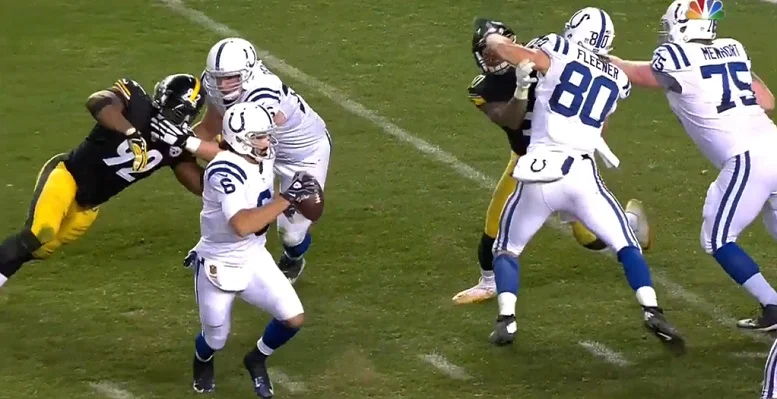
The Art and Science of the Pass Rush: A Definitive Guide to Pressuring the Quarterback
In the high-stakes chess match of modern football, few elements are as pivotal as the pass rush. It is the engine of a dominant defense, the great neutralizer of elite quarterbacks, and a spectacle of raw power, blinding speed, and tactical genius. More than just a mad dash to the quarterback, a successful pass rush is a complex, coordinated effort to collapse the pocket, disrupt timing, and create game-changing moments. This comprehensive guide delves deep into the world of pressuring the passer, exploring the techniques, strategies, and player types that define this critical aspect of the game. From the fundamental hand combat of a defensive end to the sophisticated scheming of a defensive coordinator, we will unpack everything you need to understand and appreciate the art of hunting quarterbacks.
Understanding the Core Objective
The primary goal of any pass rush is straightforward: prevent the quarterback from completing a pass. This is achieved through a sack, a hit as he throws, or by forcing him to abandon the pocket prematurely. Consistent pressure leads to hurried throws, miscommunications, and turnovers. It transforms a comfortable, rhythm-based passer into an erratic and mistake-prone player, fundamentally altering the offense’s entire game plan and creating opportunities for the entire defense to succeed.
Beyond the immediate play, a dominant pass-rushing presence has a cumulative psychological effect. An offensive line, constantly under duress, can become demoralized and start making mental errors. The quarterback, feeling the heat even when it’s not there, may develop “happy feet,” abandoning his progressions and mechanics at the first hint of pressure. This invisible impact is often the difference between a good defense and a legendary one.
The Fundamental Techniques of Hand Combat
At its heart, defeating a blocker is a violent, high-speed game of hand-to-hand combat. The first step for any rusher is the “get-off,” the explosive burst from their stance at the snap. A superior get-off can beat an offensive lineman before he’s even out of his stance, providing an immediate advantage. From there, the rusher must deploy a repertoire of moves to disengage from the block. The bull rush relies on pure power, driving the lineman backward into the quarterback’s lap with a violent punch to the chest.
Finesse moves provide the counterpoint to power. The swim move involves using a quick, over-the-top arm motion to “swim” past the blocker’s outside shoulder, while the rip move uses an upward motion under the blocker’s arm to create leverage and sear through a gap. The most celebrated move, the spin, is a high-risk, high-reward maneuver where the rusher uses the blocker’s momentum against him, spinning inward to redirect his path to the quarterback. Mastering these techniques is a lifelong pursuit for any elite edge defender.
The Power of the Bull Rush
The bull rush is the most straightforward yet devastating tool in a pass rusher’s arsenal. It is not merely about size and strength, but about leverage, pad level, and explosive force generation. The rusher aims to deliver a powerful two-hand punch directly into the breastplate of the offensive lineman, aiming to shock him, stand him up, and walk him backward into the quarterback. Success hinges on generating movement from a low center of gravity, often driving from the legs and hips to transfer immense power through the core and into the lineman.
A perfectly executed bull rush does more than just create push; it collapses the pocket’s integrity. As the lineman is driven backward, he can disrupt the timing and footwork of adjacent blockers, creating chaos and closing the quarterback’s stepping-up lane. This move is particularly effective against tackles who are lighter on their feet but lack a strong anchor. A powerful bull rush sets up all other finesse moves, as a lineman fearing the power will over-set, making him vulnerable to a swift outside speed rush.
Finesse and Speed Moves
For rushers who may lack prototypical power, finesse and speed are the great equalizers. The speed rush is a test of pure athleticism, where the defender explodes off the edge with the singular goal of turning the corner faster than the offensive tackle can react. The key is not just straight-line speed but the ability to bend the edge—to dip the shoulder, reduce the surface area the tackle can strike, and maintain balance while turning a tight corner at full speed to flatten the path to the quarterback.
The swim and rip moves are the essential counters when a tackle successfully cuts off the outside speed rush. The swim is a fluid, over-the-top motion designed to clear the tackle’s reaching arms, while the rip is an explosive, upward-driven forearm that works to pry the blocker’s hands away. These moves require exceptional hand-eye coordination and timing. A master technician will use a speed rush to get the tackle leaning outside, then swiftly counter back inside with a rip move, leaving the blocker grasping at air.
The Role of the Interior Pass Rush
While edge rushers often grab the headlines, pressure from the interior defensive line is uniquely disruptive and often more destructive to an offense’s timing. Interior rushers, typically defensive tackles, operate in the quarterback’s immediate line of sight. A push up the middle prevents the quarterback from stepping up into his throw, which is fundamental to generating velocity and accuracy on downfield passes. This forces him to retreat or escape sideways, where the edge rushers are waiting.
Great interior rushers like Aaron Donald combine an explosive first step with a dizzying array of hand-fighting techniques. Because the space is more confined, their moves must be quicker and more decisive. A well-timed club-swim or a powerful push-pull move can create an instant win from the A or B-gap. This inside pressure is the perfect complement to an outside pass rush, creating a “pick your poison” scenario for the offensive line and collapsing the pocket from all angles.
Stunts and Twists as Force Multipliers
When individual pass-rush moves are stymied, defensive coordinators turn to coordinated games known as stunts and twists. These are designed to create confusion and miscommunication among the offensive line by having defensive players cross paths and attack unexpected gaps. In a simple “TEX” (Tackle-End Exchange) stunt, the defensive tackle charges hard to the outside, drawing the block of the offensive tackle, while the defensive end loops inside into the vacated space.
These coordinated rushes are a testament to teamwork on the defensive front. Their success relies on precise timing; a moment too soon or too late can result in a collision between teammates or a clean pocket for the quarterback. A well-executed twist can make even the most talented offensive line look foolish, as two linemen may end up blocking one defender while another runs free. This strategic layer adds a cerebral element to the physical battle in the trenches.
Analyzing Different Pass Rush Schemes
The overall philosophy of a defense dictates how it approaches pressuring the quarterback. A “4-3 under” front, with four down linemen, often relies on its front four to generate pressure organically, allowing the seven players in coverage to blanket the field. This “base” pass rush is highly valued as it doesn’t require sacrificing coverage integrity. The success of this scheme hinges on having defensive linemen who can win their one-on-one matchups consistently.
On the other end of the spectrum, aggressive “3-4” defenses often use their outside linebackers as primary rushers, frequently deploying creative blitz packages from the second and third levels. This scheme creates ambiguity about who is rushing and who is dropping into coverage, forcing the quarterback to make pre-snap identifications that are often wrong. The trade-off is that blitzing leaves fewer players in coverage, making the defense vulnerable to quick passes and hot reads if the pressure doesn’t arrive in time.
The Prototypical Physical Traits
Elite pass rushers are physical freaks, possessing a rare blend of traits that allow them to excel. The most obvious is explosive first-step quickness. The ability to fire out of a stance a fraction of a second faster than the offensive lineman provides a critical advantage that can decide the rep before it truly begins. This burst is often combined with elite lateral agility and the aforementioned ability to bend the edge at a sharp angle without losing speed or balance.
Beyond speed and bend, functional strength and length are paramount. Strength is necessary to set the edge against the run and to convert speed to power in a bull rush. Length, measured in arm span, is a significant asset; long arms allow a rusher to be the first to strike the blocker’s chest, control the engagement, and keep the blocker from getting into his body. This combination of traits is so coveted that players who possess them are often selected at the very top of the NFL Draft.
The Indispensable Mental Component
The physical battle is only half the story; the mental game is what separates the good from the great. A sophisticated pass rusher is a keen student of film, studying an offensive tackle’s tendencies relentlessly. Does he set deep in pass protection, indicating a fear of speed? Does he lean on his inside foot, opening himself up to an outside move? Is he slow to get his hands up, vulnerable to an initial power punch? These are the tells a rusher hunts for.
This film study leads to a strategic plan of attack for each opponent. A rusher might decide to set up a tackle with a series of bull rushes early in the game, only to unleash a devastating speed-to-spin counter in the fourth quarter when the tackle is tired and expecting power. Understanding down and distance, offensive formations, and the quarterback’s drop depth allows the rusher to anticipate the play and react that much faster, turning a physical skill into a mental victory.
Historical Evolution of the Pass Rush
The pass rush has evolved dramatically from football’s early days. In the mid-20th century, the focus was primarily on four-man fronts and basic, power-oriented rushes. The players were often bigger, slower, and tasked with two-gap responsibilities, reading the block before reacting. The advent of the 3-4 defense in the 1970s and 80s introduced the specialized “edge rusher” role, personified by legends like Lawrence Taylor, who redefined the position with his terrifying blend of speed and violence.
The modern era has seen this specialization reach its zenith. Today’s defenses are multiple, often shifting between three and four-man fronts within a single drive. The athleticism required is unprecedented; edge rushers are now often former basketball players or tight ends who can run like receivers but possess the strength of a lineman. The game has also placed a greater emphasis on player safety, with rules protecting quarterbacks changing how rushers can finish their pursuit, adding another layer of technique to master.
Measuring Impact Beyond the Sack
While the sack is the most celebrated statistic for a pass rusher, it can be a misleading indicator of consistent performance. A player can have a tremendous impact on a game without recording a single sack. A more complete picture of a rusher’s effectiveness is painted by tracking pressures, hurries, and quarterback hits. These metrics account for the times a rusher forces an early throw, a throwaway, or an errant pass, all of which are successful outcomes for the defense.
Furthermore, the very threat of a dominant pass rush alters offensive game planning. Offenses may be forced to keep a tight end or running back in to block, limiting their receiving options downfield. They might call for more three-step drops and quick-game passes, simplifying the defense’s task in coverage. This “hidden” value is immense. As Hall of Famer Reggie White once famously stated, “The quarterback must go down, and he must go down hard.” This quote encapsulates the mindset, but the path to achieving it is paved with more than just sack totals.
Comparing Elite Pass Rusher Archetypes
The following table breaks down the characteristics, strengths, and weaknesses of two dominant pass rusher archetypes: The Speed-Bender and the Power-Rusher.
| Feature | The Speed-Bender Archetype | The Power-Rusher Archetype |
|---|---|---|
| Primary Weapon | Explosive get-off, elite flexibility to bend the edge. | Raw power, heavy hands, and a devastating bull rush. |
| Physical Profile | Often leaner, with exceptional lateral agility and a low center of gravity. | Larger frame, superior upper-body strength, and a powerful base. |
| Key Technique | The ability to “corner” at a sharp angle while maintaining speed. | Two-hand punch to shock the blocker and convert speed to power. |
| Best Counter Move | Swipe or rip move to clear hands after forcing the tackle to overset. | Push-Pull move, using the tackle’s forward lean against him. |
| Potential Weakness | Can be neutralized by tackles with quick feet and long arms. | May struggle against athletic tackles who can mirror and anchor. |
| Modern Example | Myles Garrett, Micah Parsons | Aaron Donald, Dexter Lawrence |
Developing a Pass Rush Plan
For a young player, developing a successful pass rush strategy begins with self-scouting. He must honestly assess his own strengths: Is he naturally powerful or exceptionally fast? This honest appraisal allows him to build his game around a “go-to” move—a reliable, bread-and-butter technique he can execute with confidence on third down. This primary move becomes his identity, the threat that the offensive tackle must spend all week preparing for.
Once that primary move is established, the rusher must develop a potent counter move. If his best move is an outside speed rush, his counter should be an inside move like a rip or a spin. The entire pass rush plan is built on this setup-and-counter relationship. The rusher uses his primary move to plant a specific fear in the tackle’s mind, then exploits the overreaction with his counter. This strategic layering transforms a player from a one-trick pony into an unpredictable and complete nightmare for blockers.
What Is QBR In Football? The Ultimate Guide To Understanding Quarterback Rating
The Critical Link Between Pass Rush and Coverage
A truly dominant defense understands the symbiotic relationship between the pass rush and the secondary. They are not separate units but interconnected components of a single system. A ferocious pass rush that pressures the quarterback in under 2.5 seconds makes any secondary look elite, as defensive backs are not required to cover receivers for extended periods. The ball is forced out quickly, leading to more breakups and interception opportunities.
Conversely, a lockdown secondary is a pass rusher’s best friend. If the quarterback’s first and second reads are blanketed, he is forced to hold the ball, scanning for a third option or an escape route. These extra seconds in the pocket are a gift to the defensive line, allowing their rushes to develop and their counter moves to take effect. This is often referred to as “coverage sacks.” The two units work in a virtuous cycle, each elevating the performance of the other.
Common Misconceptions and Clarifications
A prevalent misconception is that the player who gets the sack deserves all the credit. In reality, many sacks are “clean-up” sacks created by the pressure of a teammate. An edge rusher might force the quarterback to step up directly into the grasp of an interior tackle who looped on a stunt. Understanding the concept of “pressure created” versus “sacks finished” is key to evaluating performance. A rusher’s primary job is to disrupt the quarterback’s process, not just to tally sacks.
Another common fallacy is that blitzing is the only way to generate pressure against a strong offensive line. While blitzing is a valuable tool, a well-coached defense with a strong four-man rush can be far more stable and difficult to attack. Sending extra rushers creates vulnerabilities that elite quarterbacks like Tom Brady or Patrick Mahomes are expert at exploiting. Often, the mark of a great defense is its ability to generate pressure with just four rushers, allowing for complex coverage schemes behind them.
The Future of Pressuring the Quarterback
The evolution of the pass rush is an arms race against offensive innovation. As offenses employ more run-pass options (RPOs), quick-game concepts, and mobile quarterbacks, defenses are forced to adapt. We are seeing the rise of the “tweener” defender—a player like Micah Parsons who can line up as a defensive end on one play and drop into coverage as a linebacker on the next. This ambiguity is the new frontier in disrupting offensive timing.
Looking ahead, analytics will continue to shape how teams value and deploy their rushers. The concept of a “rotation” of fresh defensive linemen, rather than relying on every-down workhorses, is gaining traction to maintain maximum explosiveness on every snap. Furthermore, the strategic use of simulated pressures—where only four players rush, but they come from unexpected positions—will become more sophisticated. The future of the pass rush lies in deception, versatility, and targeting offensive protections with surgical precision.
Conclusion
The pass rush is the heartbeat of a formidable defense, a complex discipline that blends savage physicality with intricate strategy. It is not a singular act but a symphony of explosive get-offs, violent hand combat, coordinated games, and relentless pursuit. From the bull rush that showcases raw power to the nuanced spin move that exemplifies technical mastery, every component works in concert to achieve one goal: to disrupt the quarterback’s world. Understanding these layers—the techniques, the schemes, the mental warfare, and the inseparable link to coverage—provides a deeper appreciation for one of football’s most captivating battles. In the endless chess match between offense and defense, a dominant pass rush remains the most powerful queen on the board.
Frequently Asked Questions
What is the most important physical trait for a pass rusher?
While a combination of traits is ideal, an explosive first step is arguably the most critical. Beating the offensive lineman off the snap by even a fraction of a second provides an immediate advantage that can determine the entire rep. This burst, combined with the flexibility to bend the edge, is the foundation upon which all other pass-rush moves are built.
How does a “coverage sack” occur?
A coverage sack happens when the defensive secondary covers all of the quarterback’s receiving options so effectively that he is forced to hold the ball longer than he intended. This gives the defensive linemen and blitzers extra time to defeat their blocks and complete the sack. It highlights the crucial teamwork between the secondary and the pass rush.
Can a team have a good defense without a great pass rush?
It is possible, but it is exceptionally difficult and places immense pressure on the secondary. Without a consistent pass rush, even the best defensive backs can only cover receivers for so long before windows open up. A lack of pressure allows quarterbacks to operate with comfort and go through their full progressions, making the defense inherently vulnerable to sustained drives.
What is the difference between a pressure, a hurry, and a sack?
A sack is a clear-cut statistic where the quarterback is tackled behind the line of scrimmage before he can throw a pass. A pressure is a broader term for any play where the rusher forces the quarterback to alter his throwing motion or footwork. A hurry is a type of pressure where the quarterback is forced to throw the ball earlier than he wanted to, often resulting in an incomplete pass.
Why do some elite pass rushers have quiet games?
Even the best pass rushers can be neutralized by a well-designed game plan. Offenses may use double-teams, chip blocks from tight ends or running backs, or employ a quick-passing attack that gets the ball out before the rush can develop. Furthermore, a great individual matchup against an athletic offensive tackle can lead to a stalemate, demonstrating the weekly challenges of the position.
