


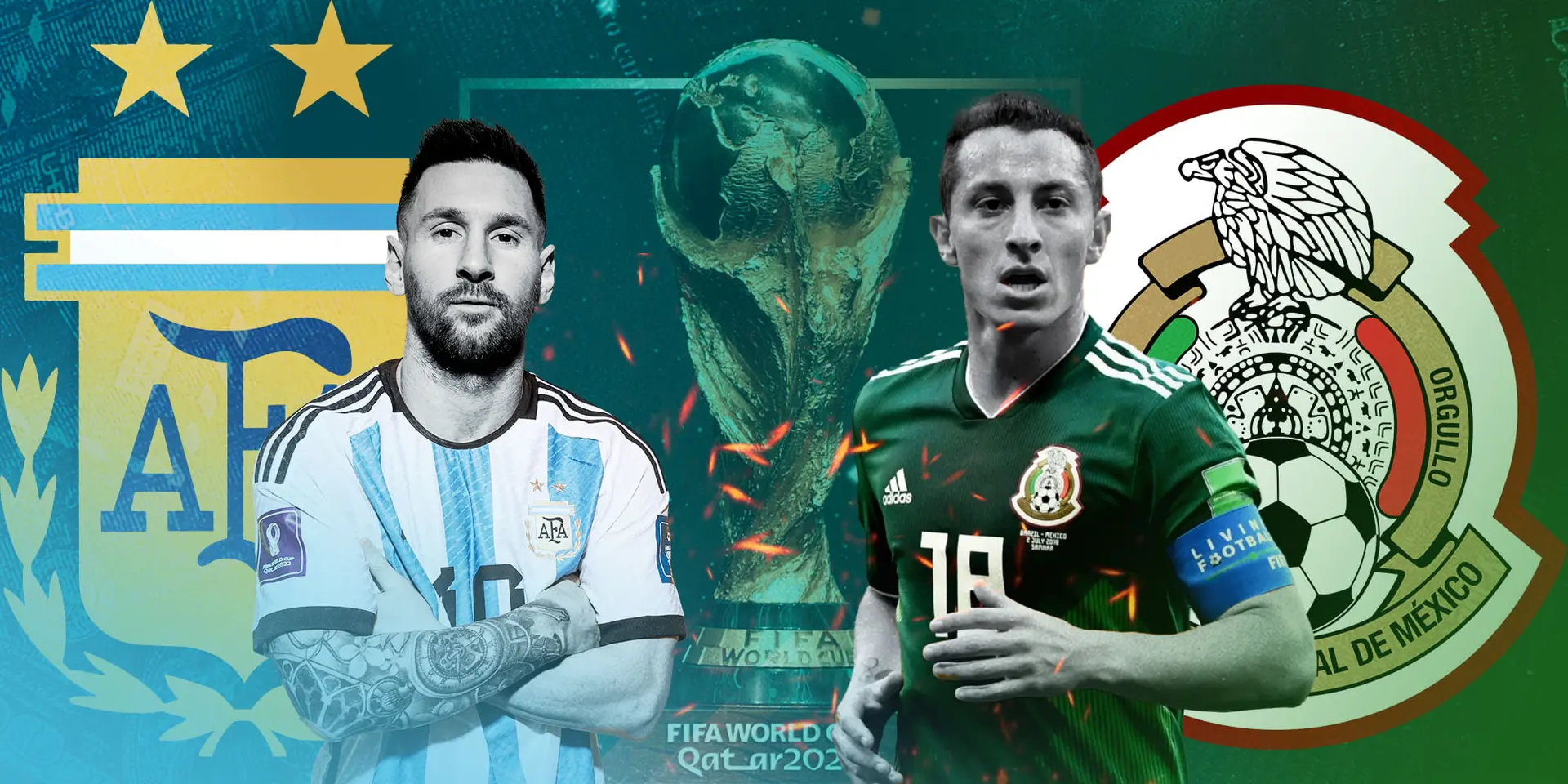
Argentina vs Mexico:When the fixture is announced, a palpable buzz travels across two nations and, indeed, the entire footballing world. It is more than just a game; it is a cultural event, a collision of two distinct footballing identities, and a stage where legends are born and hearts are broken. The rivalry between Argentina and Mexico is a unique tapestry woven with threads of intense competition, mutual respect, and unforgettable moments that have etched themselves into the annals of the sport. This is not a derby born of geographical proximity, but one forged in the high-stakes crucible of international tournaments, particularly the FIFA World Cup. For decades, whenever these two CONMEBOL and CONCACAF giants have locked horns, fans have been treated to a spectacle that encapsulates the very essence of football: skill, emotion, tension, and sheer, unadulterated passion.
To understand the Argentina vs Mexico dynamic is to understand a clash of philosophies. On one side, you have Argentina, a nation that lives and breathes football, producing some of the most technically gifted and creatively brilliant players the world has ever seen. Their game is often one of individual flair, intricate passing, and a relentless will to win. On the other side stands Mexico, a team known for its fiery spirit, tactical discipline, and a never-say-die attitude that has often made them a formidable opponent for even the most celebrated football nations. Their encounters are rarely straightforward. They are battles of wits, tests of nerve, and celebrations of the beautiful game that transcend the final scoreline. This article will take you on a deep dive into this captivating rivalry, exploring its historical roots, its most iconic matches, the legendary players who have defined it, and the tactical chess matches that unfold on the pitch.
The Historical Context of the Rivalry
The history between Argentina and Mexico on the football pitch is a story of contrasting fortunes and pivotal intersections. While Argentina has long been considered a global superpower, with a rich history dating back to the early 20th century, Mexico’s ascent has been a steady climb to consistent relevance. The rivalry truly found its teeth in the latter half of the 20th century, as international tournaments became more frequent and the paths of South American and North American teams began to cross with greater regularity. The narrative that has developed is one where Argentina is often the heavyweight favorite, the team boasting the star power, while Mexico embraces the role of the passionate underdog, capable of rising to the occasion and toppling giants.
This historical dynamic has created a fascinating psychological layer to their meetings. For Argentina, a match against Mexico is often viewed as a must-win game, an expectation born from their trophy-laden history and the weight of their iconic blue and white striped jersey. The pressure is immense, and any stumble is seen as a national crisis. For Mexico, the match represents a golden opportunity—a chance to measure themselves against the very best and, in doing so, make a statement to the world. A victory over Argentina is not just three points; it is a landmark achievement, a moment of national pride that is celebrated for years to come. This difference in perspective fuels the intensity every time they meet, creating an environment where history is always present on the pitch.
Memorable World Cup Clashes
The World Cup is the grandest stage in football, and it is here that the Argentina vs Mexico rivalry has produced its most dramatic and enduring chapters. These are the matches that define generations, the games that are replayed in highlight reels and remembered in bars and living rooms for decades. The knockout nature of so many of their World Cup encounters adds a layer of finality and desperation that elevates the drama to almost unbearable levels. When these two teams meet with their World Cup lives on the line, footballing history is almost guaranteed to be made.
One of the most significant and controversial meetings was in the 2006 World Cup Round of 16 in Leipzig. The match was a tense, tightly-contested affair that seemed destined for extra time, locked at 1-1. Then, in the 98th minute, Argentina’s Maxi Rodríguez produced a moment of sheer magic, volleying a dropping ball out of the air with unbelievable technique to score one of the greatest goals in World Cup history. While the goal was undeniably spectacular, it was preceded by a contentious moment where Argentine defender Gabriel Heinze appeared to foul a Mexican player in the build-up, a decision that remains a point of contention for Mexican fans to this day. This match perfectly encapsulated the fine margins that often decide these epic battles—a moment of individual genius, a controversial refereeing decision, and heartbreak for one side.
Another unforgettable World Cup clash occurred four years later in the 2010 World Cup in South Africa, again in the Round of 16. This time, the hero for Argentina was their talismanic captain, Carlos Tevez. The game is forever remembered for Tevez’s opening goal, which was blatantly offside. The entire stadium, and millions watching on television, could see the error, yet the goal stood. This moment of officiating failure seemed to break Mexico’s spirit, and Argentina went on to win 3-1. For Mexico, it was another case of “what could have been,” a loss made more bitter by the sense of injustice. For Argentina, it was a passage to the quarter-finals, but the victory was somewhat tarnished by the controversy, adding another complex layer to their World Cup history with Mexico.
Iconic Players Who Shaped the Fixture
The narrative of Argentina vs Mexico is written by the players who grace the pitch. These are the men who, through moments of brilliance, sheer force of will, or heartbreaking error, become forever linked with this fixture. Their performances in the iconic white and green or blue and white stripes become part of their legacy, defining their careers in the eyes of their respective nations. From legendary figures of the past to the modern-day icons, these players are the human element that makes this rivalry so compelling.
For Argentina, the list is a who’s who of footballing aristocracy. The name Lionel Messi looms largest over the modern era. His performances against Mexico have been decisive, from scoring a stunning goal in the 2007 Copa América semifinal to delivering a magical assist and a thunderous strike in the 2022 World Cup group stage, a performance that single-handedly revived Argentina’s tournament and set them on the path to ultimate glory. Before Messi, there was Diego Maradona, whose mere presence intimidated opponents. While he never scored against Mexico in a World Cup, his influence in the matches he played set the standard for what it means to represent Argentina. Players like Gabriel Batistuta, Juan Román Riquelme, and Maxi Rodríguez have also left their indelible mark, scoring crucial goals and controlling the tempo of these high-pressure encounters.
Mexico, meanwhile, has produced its own pantheon of heroes who have risen to the challenge of facing Argentina. Goalkeepers like Oswaldo Sánchez and Guillermo Ochoa have often put in heroic, match-defining performances, making spectacular saves to keep their team in the game. Cuauhtémoc Blanco, with his unique talent and fiery personality, was a constant threat, capable of unlocking the Argentine defense with a moment of skill. Jared Borgetti, a prolific striker, embodied the Mexican fighting spirit, while Rafael Márquez, “El Kaiser,” provided leadership and defensive steel, even managing to score in two separate World Cups against Argentina. These players represent the heart and soul of Mexican football, and their battles against the Argentine superstars are the stuff of legend.
Tactical Analysis and Styles of Play
Beyond the passion and the star players, the Argentina vs Mexico matchup is a fascinating tactical duel. The two nations typically approach the game with fundamentally different philosophies, creating a compelling contrast on the pitch. The manager’s game plan, the formation chosen, and the in-game adjustments often prove to be the difference between victory and defeat. Understanding these tactical nuances adds a deeper layer of appreciation for what unfolds during the 90 minutes.
Argentina’s tactical approach has historically been built around maximizing the impact of their generational talents. The strategy often involves a solid defensive foundation, usually with a back four, and a creative midfield designed to control possession and feed the attacking trident. The game plan, especially in the modern era, frequently boils down to “get the ball to Messi.” However, this is an oversimplification. It’s about creating structures and making runs that free up their best players in dangerous areas. They often look to exploit spaces behind the opposition’s defense with incisive through-balls and rely on the individual brilliance of their forwards to create goals out of nothing. Their pressing can be intense, and they are masters at controlling the tempo of a game, slowing it down or accelerating it at will.
Mexico, under most of its coaches, employs a more system-based approach. They are known for their high-intensity press, seeking to disrupt the opposition’s rhythm and win the ball high up the pitch. They often field a compact 4-3-3 or a 5-3-2 formation, focusing on defensive solidity and quick transitions. Their full-backs are crucial, providing width in attack while being disciplined in defense. The Mexican game is heavily reliant on teamwork, coordination, and physical endurance. They aim to frustrate technically superior teams like Argentina by denying them time and space on the ball, forcing errors, and capitalizing on set-pieces. The tactical battle is often a case of Argentina’s individual quality trying to break down Mexico’s collective resolve and organization.
The Fan Culture and National Passion
A football match is nothing without its fans, and when Argentina and Mexico meet, the atmosphere is electric. The passion emanating from the stands is a powerful force that resonates with the action on the pitch, creating an unforgettable experience. The two fan bases have distinct cultures and traditions, but they share a common, all-consuming love for the game and their national teams. This shared passion, expressed in different ways, makes the buildup and the match itself a vibrant cultural festival.
Argentinian fans are famously vocal and emotionally invested. Their support is a constant, roaring presence, filled with song and an unwavering belief in their team. The iconic chant “Vamos, Vamos Argentina” echoes throughout stadiums, a powerful anthem of encouragement and identity. Argentine fans travel in huge numbers, painting stadiums in blue and white. They carry the weight of expectation with a unique blend of nervous energy and arrogant confidence, knowing their team is always a moment of magic away from glory. The pressure they transmit is immense, but so is the lift they can give their players in moments of need.
Mexican supporters, known for their incredible spirit and creativity, bring a different but equally powerful energy. The thunderous, synchronized shout of “¡Goooool!” is known worldwide, but their repertoire is vast. The iconic “Cielito Lindo” sung by tens of thousands of fans is a stirring display of unity and national pride. Mexican fans are also known for their good-natured, festive atmosphere, often wearing elaborate costumes and bringing a carnival-like feeling to the stadium. However, beneath this festive exterior lies a deep, fierce passion. Their support is relentless, and they push their team forward with a raw, emotional intensity that can intimidate opponents and inspire their players to perform beyond their limits.
Beyond the World Cup Other Significant Matches
While the World Cup clashes understandably grab the headlines, the history of Argentina vs Mexico is also written in other important competitions. The Copa América, where Mexico is often invited as a guest participant, has provided another prestigious stage for this rivalry. These matches, while sometimes lacking the do-or-die intensity of a World Cup knockout game, still carry significant weight and have produced their own classic encounters. They offer a different dynamic, often occurring in the group stages or earlier knockout rounds, but the desire to win is no less fierce.
The 1993 Copa América Final in Guayaquil, Ecuador, stands as a monumental chapter in this rivalry. In a tense and hard-fought match, Argentina emerged victorious with a 2-1 win, thanks to two goals from Gabriel Batistuta. This victory gave Argentina their record-breaking 14th Copa América title, a testament to their dominance in the South American game. For Mexico, it was a heartbreaking end to a fantastic campaign where they had proven they could compete with the best. Another significant match was the 2004 Copa América quarter-final, where Argentina triumphed in a nail-biting penalty shootout after a goalless draw. These matches in continental tournaments have helped to build the consistent narrative of a competitive and closely-fought rivalry, proving that every meeting between these two nations is an event unto itself.
The Statistical Head-to-Head Record
A look at the cold, hard numbers provides a clear, if somewhat simplistic, picture of the historical balance of power in the Argentina vs Mexico rivalry. Statistics can tell a story of dominance, competitiveness, or stalemate, and in this case, the numbers heavily favor one side. However, as any football fan knows, statistics rarely tell the whole story, especially in a fixture filled with as much drama and nuance as this one.
Ryan Williams: The Visionary Reshaping Real Estate and Redefining Ambition
The overall record is overwhelmingly in Argentina’s favor. Across all official competitions, including World Cup matches, Copa América, and international friendlies, Argentina has won the vast majority of the encounters. Mexico’s victories are few and far between, making each one all the more precious for their fans. The goal difference is also significantly skewed towards the South Americans, reflecting their historical offensive firepower. However, a deeper dive into the most important matches—the World Cup knockout games—reveals a slightly different tale. While Argentina has always advanced, the matches are almost always incredibly close, often decided by a single goal, in extra time, or via a moment of controversy. This demonstrates that despite the statistical dominance, Mexico has consistently pushed Argentina to the absolute limit on the biggest stages.
Here is a simplified table illustrating their head-to-head record in major competitions:
| Competition | Matches Played | Argentina Wins | Mexico Wins | Draws | Argentina Goals | Mexico Goals |
|---|---|---|---|---|---|---|
| FIFA World Cup | 4 | 4 | 0 | 0 | 10 | 4 |
| Copa América | 10 | 7 | 1 | 2 | 21 | 9 |
| International Friendlies | 15 | 8 | 3 | 4 | 29 | 18 |
| Total (All Matches) | 29 | 19 | 4 | 6 | 60 | 31 |
The Future of the Rivalry
As with any great sporting rivalry, the story of Argentina vs Mexico is constantly evolving. The players change, the tactics adapt, and the balance of power can shift. The question on every fan’s mind is: what does the future hold for this epic confrontation? With the retirement of one generation and the rise of the next, the dynamics are always in flux, promising new chapters full of fresh drama and new heroes.
For Argentina, the post-Messi era is a looming reality that the entire footballing world contemplates. The challenge will be to maintain their elite status without their once-in-a-generation superstar. The next wave of Argentine talent is already emerging, with players like Julián Álvarez, Enzo Fernández, and Alexis Mac Allister showing they have the quality to compete at the highest level. The system may need to become more collective, but the talent pipeline remains strong. For Mexico, the future is about bridging the gap consistently. They have proven they can compete, but the next step is to start converting those competitive performances into historic victories in knockout rounds. Developing world-class attacking talent and maintaining their trademark fighting spirit will be key to finally overcoming their historical hurdle.
The expanding football calendar, including new tournaments like the expanded FIFA Club World Cup and more inter-confederation play, guarantees that these two nations will continue to meet frequently. Each new encounter adds another layer to the story. The rivalry is secure; it is embedded in the fabric of international football. The passion of the fans, the history of dramatic moments, and the sheer quality on display ensure that whenever the fixture is drawn, the world will be watching, waiting for the next unforgettable installment in the enduring saga of Argentina vs Mexico.
Frequently Asked Questions About Argentina vs Mexico
What is the overall record between Argentina and Mexico in the World Cup?
Argentina has a perfect record against Mexico in the FIFA World Cup, having won all four of their meetings. These matches took place in the Round of 16 in 2006, 2010, and 2022, and in the group stage in 1930. Despite Argentina’s clean sweep, it’s crucial to note that three of these four victories were incredibly tight affairs, with two going to extra time and another being marred by a controversial offside goal, highlighting how competitive these matches have truly been.
Has Mexico ever beaten Argentina in a major tournament?
Yes, Mexico has secured historic victories over Argentina in major tournaments outside of the World Cup. Their most famous win came in the 1999 FIFA Confederations Cup, where they defeated Argentina 1-0 in the group stage. More recently, they achieved a stunning 2-0 victory over a Lionel Messi-led Argentina in the 2007 Copa América semifinal, a result that sent shockwaves through the football world and stands as one of Mexico’s most significant triumphs in this rivalry.
Who has scored the most goals in the Argentina vs Mexico rivalry?
While a comprehensive historical tally is difficult to pinpoint for every player, the most iconic and decisive goals in recent memory have come from Argentine stars. Lionel Messi has scored crucial goals, including his strike in the 2022 World Cup. However, the most famous single goal is arguably Maxi Rodríguez’s stunning extra-time volley that won the 2006 World Cup knockout match. For Mexico, players like Rafael Márquez, who scored in the 2006 and 2010 World Cups, and Jared Borgetti are among their most notable scorers in this fixture.
Why is the Argentina vs Mexico rivalry so intense despite not being neighbors?
The intensity of the Argentina vs Mexico rivalry stems from its high-stakes context rather than geographical proximity. The vast majority of their most important matches have occurred in the knockout stages of the World Cup and Copa América, where the consequence of a loss is instant elimination. This “win or go home” pressure, combined with the contrasting styles of play and the immense national pride of two football-obsessed countries, creates a powder keg of emotion and drama that makes every encounter feel like a final.
What was the significance of the 2022 World Cup match between Argentina and Mexico?
The 2022 World Cup group stage match was one of the most psychologically pivotal games of the entire tournament. After a shocking loss to Saudi Arabia in their opener, Argentina was under immense pressure and facing potential elimination. In a tense, must-win situation, it was Lionel Messi who broke the deadlock with a low, driven shot, before setting up Enzo Fernández for a sublime second goal. This 2-0 victory rescued Argentina’s campaign, restored their confidence, and set them on a path that would ultimately lead to winning the World Cup, making it one of the most significant chapters in the long history of Argentina vs Mexico.
Conclusion
The rivalry between Argentina and Mexico is a rich and multifaceted saga that transcends a simple tally of wins and losses. It is a story defined by moments of breathtaking individual skill, heartbreaking controversy, and unwavering national passion. While the historical record leans decisively towards Argentina, the narrative is far from one-sided. Mexico has consistently proven to be a formidable and courageous opponent, pushing their more decorated rivals to the absolute limit time and again on the world’s biggest stage. The drama of their World Cup clashes, the tactical battles between contrasting philosophies, and the electric atmosphere generated by two of the world’s most passionate fan bases have cemented this fixture as a must-watch event in the global football calendar. It is a rivalry built on respect and a shared love for the beautiful game, a perpetual dance between a heavyweight and a relentless challenger that promises to produce more unforgettable drama for generations to come.
