


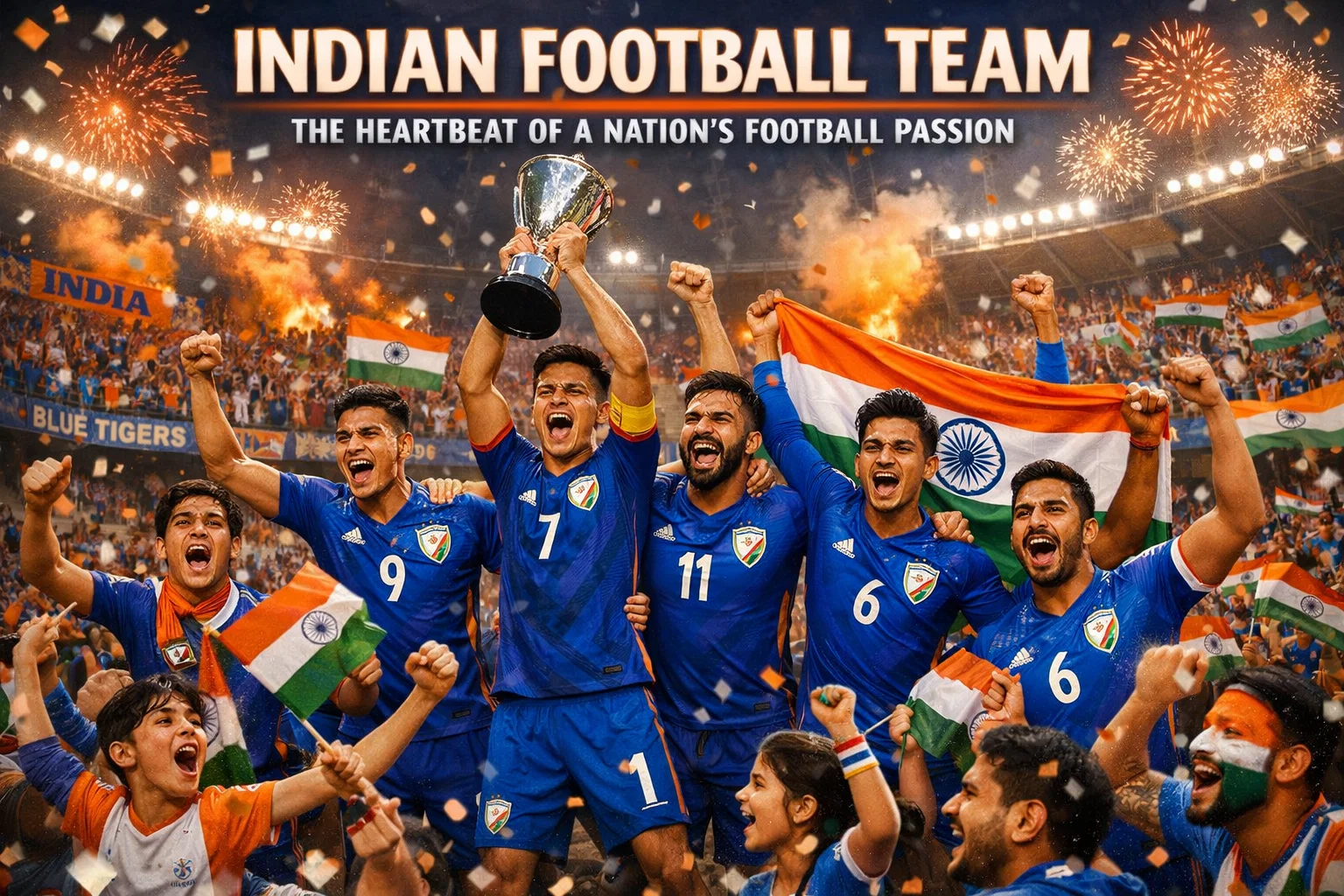
The Indian football team has always stirred something special in the hearts of millions across the country. Whether it is the roar in packed stadiums during SAFF Championship nights or the quiet pride when the Blue Tigers pull off a gritty draw against stronger sides, this squad represents more than just eleven players on a pitch. It carries the dreams of a cricket-mad nation that secretly yearns for football to shine just as brightly. Today, with a FIFA ranking hovering around 141 and a passionate new coach at the helm, the Indian football team stands at a fascinating crossroads – rich in history, tested by challenges, and brimming with potential for a brighter tomorrow.
Fans often talk about the “sleeping giant” tag given by FIFA President Gianni Infantino, and it fits perfectly. With over 1.4 billion people and a booming Indian Super League providing top-class infrastructure, the foundation is stronger than ever. Yet results in major tournaments have been mixed, leaving supporters hungry for consistent success. This long-form guide dives deep into every aspect of the Indian football team – its glorious past, present squad, tactical shifts, fan culture, and what the future might hold. If you love the beautiful game and want to understand why the Blue Tigers matter so much, you are in the right place.
From barefoot heroes in the 1948 Olympics to modern stars lighting up the ISL, the journey of the Indian football team is filled with unforgettable moments that deserve to be celebrated. Let us walk through it all, one chapter at a time.
Tracing the Roots: The Early Years of the Indian Football Team
The story of the Indian football team begins long before independence, in the dusty maidans of Calcutta and Bombay where British officers and local enthusiasts first kicked a ball together. In the 1920s and 1930s, touring sides from India – sometimes mixed with British players, sometimes all-Indian – took on teams in Ceylon, South Africa, Australia, and beyond. Gostha Pal, the legendary “Chinese Wall,” captained many of those early expeditions and became the first iconic figure associated with the national side.
One of the most memorable early tours came in 1938 when an all-Indian team visited Australia. They played 17 matches, including five against the Australian national side. The first FIFA-recognized international was a 5-3 defeat in Sydney, but the Indians impressed with their skill and flair. Players like Karuna Bhattacharya and R. Lumsden left a mark, with Lumsden scoring India’s first recorded international hat-trick. These tours laid the groundwork for what would become a proud footballing identity after 1947.
Post-independence, the Indian football team made its Olympic debut in London 1948. Captained by Dr. Talimeren Ao, the squad famously played barefoot against France and lost 2-1 in a match that still lives in folklore. The image of Indian players without boots, holding their own against a European side, captured the imagination of a newly free nation. Though they did not advance, the performance signaled that India belonged on the global stage. Domestic leagues in Calcutta and Goa were already producing talent, and the AIFF, formed in 1937, began organizing national camps more seriously. These early years were about building character as much as collecting results, setting the tone for the golden era that followed.
The Golden Age: Triumphs That Still Inspire Generations
The 1950s and 1960s remain the undisputed golden period for the Indian football team. Under the visionary coach Syed Abdul Rahim, the side transformed into one of Asia’s strongest outfits. Rahim emphasized discipline, fitness, and a fluid passing style that suited Indian players’ natural agility. In 1951, hosting the Asian Games in New Delhi, the Indian football team clinched gold by beating Iran 1-0 in the final. The entire nation celebrated as football briefly rivaled cricket in popularity.
The 1956 Melbourne Olympics remain perhaps the greatest chapter. The Indian football team reached the semi-finals – the best finish by any Asian side at that time – and finished fourth overall. Neville D’Souza scored a hat-trick against Australia in the quarter-finals, becoming the first Asian to achieve the feat in Olympic football history. Matches against Yugoslavia and Bulgaria showcased India’s ability to compete with the world’s best. Chuni Goswami, P.K. Banerjee, and Sailen Manna formed the backbone of a team that played with heart and intelligence.
In 1962, the Indian football team defended Asian Games glory in Jakarta, defeating South Korea 2-1 in the final. Two years later, in the 1964 AFC Asian Cup, they finished runners-up – their best-ever performance in the competition. These successes were not flukes; they resulted from systematic coaching, strong club football in Calcutta and Goa, and a generation of players who treated the national jersey as sacred. Older fans still recall radio commentaries of those matches with misty eyes. The golden age proved that when given proper support, the Indian football team could rule the continent. Sadly, maintaining that momentum proved difficult in the decades that followed, but the memories continue to fuel ambition today.
Post-Golden Era Struggles and the Long Road to Revival
After the highs of the 1960s, the Indian football team entered a phase of decline that lasted nearly four decades. Changing political priorities, reduced funding, and cricket’s meteoric rise pulled resources and attention away from football. Performances in Asian Games and AFC competitions became inconsistent. By the 1970s and 1980s, the side often struggled to progress beyond group stages, though they continued to dominate South Asian rivals.
The 1980s brought some consolation with SAFF dominance. India won the inaugural SAFF Championship in 1993 and added titles in 1997 and 1999. Bhaichung Bhutia emerged as the new face of Indian football – a skilful forward whose goals and leadership gave fans fresh hope. Under his captaincy, the team climbed to its highest-ever FIFA ranking of 94 in 1996. Yet qualifying for major tournaments remained elusive. The 1990s and early 2000s were marked by near-misses in World Cup and Asian Cup qualifiers, leaving supporters frustrated but loyal.
The real turning point arrived in the mid-2000s. The appointment of Bob Houghton as coach in 2006 sparked a revival. The Indian football team won back-to-back Nehru Cups in 2007 and 2009, then stunned everyone by lifting the 2008 AFC Challenge Cup on home soil. Sunil Chhetri’s hat-trick in the final against Tajikistan secured qualification for the 2011 AFC Asian Cup – India’s first appearance in 24 years. Though the 2011 campaign ended with three group-stage defeats, the experience was invaluable. These years showed that with professional coaching and better preparation, the Indian football team could once again compete at the highest level in Asia.
How the Indian Super League Changed Everything for the National Side
The launch of the Indian Super League in 2014 marked a watershed moment. For the first time, top international stars like Alessandro Del Piero, David Trezeguet, and Robbie Keane played in India, raising the overall standard dramatically. ISL clubs invested in academies, modern training facilities, and foreign coaches, creating a talent pipeline that directly benefited the Indian football team.
Players who once struggled for regular high-level matches now competed week in, week out against quality opposition. The league’s popularity exploded, drawing massive television audiences and filling stadiums. Young talents like Lallianzuala Chhangte, Anwar Ali, and Akash Mishra gained valuable exposure. The national team began featuring more ISL-based players, bringing tactical discipline and physical fitness that earlier generations sometimes lacked.
Critics initially worried that the ISL might overshadow the I-League, but the dual-league system eventually strengthened the ecosystem. Today, the Indian football team benefits from a deeper talent pool, better medical support, and data-driven training methods introduced through ISL clubs. Without the league, the recent qualification for consecutive Asian Cups and consistent SAFF success would have been impossible. The ISL did not just improve club football – it gave the national side a fighting chance on the continental stage.
Legendary Players Who Defined the Indian Football Team
No discussion about the Indian football team is complete without celebrating its icons. Sunil Chhetri stands tall as the all-time leading scorer with 95 goals in 157 appearances. His dedication, leadership, and clutch performances – including multiple hat-tricks against Pakistan and a memorable goal against Thailand in the 2019 Asian Cup – made him a national hero. Even after retirement in 2024, Chhetri’s influence lingers through academies and his work inspiring the next generation.
Bhaichung Bhutia, the “Sikkimese Sniper,” brought flair and fearlessness in the 1990s and 2000s. His move to European clubs like Bury and Mohun Bagan made him a trailblazer. Earlier legends include Neville D’Souza, whose Olympic hat-trick remains unmatched, and Chuni Goswami, who captained India to Asian Games gold while also excelling in cricket. Goalkeeper Peter Thangaraj and defender Sailen Manna earned Padma Shri awards for their contributions.
Modern heroes like Gurpreet Singh Sandhu, the current captain and most-capped goalkeeper, provide stability at the back. Sandesh Jhingan’s never-say-die attitude and Lallianzuala Chhangte’s dazzling wing play give fans reasons to cheer. These players share one common trait: they wear the blue jersey with immense pride and understand they represent 1.4 billion dreams. Their stories remind every young footballer in India that the path from local maidan to national team is possible with hard work and talent.
Current Squad and Rising Stars Lighting Up the Pitch
As of early 2026, the Indian football team under coach Khalid Jamil features a balanced mix of experienced campaigners and exciting youngsters. Gurpreet Singh Sandhu remains the reliable last line of defence, captaining the side with quiet authority. The backline boasts Sandesh Jhingan’s physical presence, Rahul Bheke’s versatility, and Anwar Ali’s composure on the ball. New additions like naturalized winger Ryan Williams bring fresh dynamism and European experience.
In midfield, players such as Mahesh Singh Naorem and Suresh Singh Wangjam control tempo with intelligent passing, while Lallianzuala Chhangte continues to torment defences from the flanks. Up front, Rahim Ali and Vikram Partap Singh lead the line, supported by emerging talents like Edmund Lalrindika. The squad selected for the 2027 AFC Asian Cup qualifiers against Bangladesh showcased depth, with several debutants earning call-ups.
What stands out is the team’s improved fitness and tactical awareness. Jamil, the first Indian head coach in years, emphasizes unity and pressing high up the pitch. Recent results, including a 3-0 friendly win over Maldives ending a long winless streak and strong performances in the CAFA Nations Cup, signal positive momentum. The Indian football team may not yet be challenging the continent’s elite consistently, but the current group possesses the character to surprise bigger nations.
Coaching Evolution and Tactical Approaches Over the Decades
The Indian football team has seen a fascinating evolution in coaching philosophies. Syed Abdul Rahim’s 1950s emphasis on short passing and fitness laid the foundation for success. Foreign coaches like Bob Houghton and Stephen Constantine introduced professional structures, video analysis, and periodized training. Igor Stimac focused on defensive organization during his tenure, helping qualify for the 2023 Asian Cup.
Khalid Jamil’s appointment in 2025 brought a distinctly Indian touch. As a former player and coach with vast I-League experience, Jamil understands local conditions, player psychology, and the need to blend ISL stars with regional talent. His tactics revolve around compact defending, quick transitions, and exploiting set-pieces – areas where the side has shown improvement.
Tactical flexibility remains key. Against stronger opponents, the Indian football team often sits deep and hits on the counter. Against SAFF rivals, they dominate possession and press aggressively. The integration of sports science – GPS tracking, nutritionists, and mental conditioning – has elevated standards. While challenges persist in converting chances, the tactical foundation is now solid enough to build upon for sustained progress.
Major Achievements and Memorable Victories Worth Celebrating
The Indian football team’s trophy cabinet may not overflow like European giants, but every piece of silverware carries immense emotional weight. Two Asian Games gold medals (1951 and 1962) remain the pinnacle. The 2008 AFC Challenge Cup victory not only qualified the team for the Asian Cup but also restored national pride after years of mediocrity. Eight SAFF Championship titles, the latest in 2023 with a dramatic penalty shootout win over Kuwait, underline regional supremacy.
The 2019 Asian Cup group-stage victory against Thailand (4-1) ended a 55-year wait for a major tournament win and featured one of the team’s most clinical performances. Intercontinental Cup triumphs and Nehru Cup successes further highlight consistent success in invitational tournaments.
Here is a quick overview of major honors:
| Tournament | Titles Won | Notable Years |
|---|---|---|
| Asian Games | 2 | 1951, 1962 |
| SAFF Championship | 8 | 1993, 1997, 1999, 2005, 2011, 2015, 2021, 2023 |
| AFC Challenge Cup | 1 | 2008 |
| Nehru Cup | 3 | 2007, 2009, 2012 |
| Intercontinental Cup | 2 | 2018, 2023 |
These victories are more than statistics – they are moments when the entire country unites behind the Blue Tigers. Each triumph inspires thousands of kids to pick up a football instead of a cricket bat, slowly shifting the sporting landscape.
Challenges Facing the Indian Football Team in the Modern Era
Despite progress, the Indian football team confronts several hurdles. Infrastructure outside major cities remains basic, limiting grassroots development. The domestic season’s structure sometimes clashes with international windows, affecting player availability and fitness. FIFA ranking fluctuations reflect inconsistency against stronger Asian sides, as seen in the failure to qualify for the 2027 Asian Cup after a shock loss to Bangladesh.
Financial disparities between cricket and football continue to affect sponsorship and media coverage. Talent identification in remote areas needs strengthening, though AIFF initiatives are addressing this. The lack of regular matches against top-50 ranked teams hampers experience levels. Additionally, converting promising performances into points in qualifiers remains a recurring issue.
Yet these challenges also present opportunities. The growing ISL audience, corporate interest, and government schemes like Khelo India are gradually closing gaps. The Indian football team’s resilience in overcoming past crises suggests it can tackle current obstacles with the right support system.
Fan Culture and the Unwavering Support for the Blue Tigers
Indian football fans, especially the Blue Pilgrims, are among the most passionate in Asia. They travel across the country, create breathtaking tifo displays, and chant for 90 minutes regardless of the scoreline. During the 2023 SAFF Championship in Bengaluru, the atmosphere at Sree Kanteerava Stadium was electric, pushing the team to glory.
Social media has amplified this support, with hashtags like #BlueTigers trending during every match. Fans analyze tactics, celebrate individual brilliance, and even fund grassroots projects when official support lags. This emotional connection keeps the Indian football team relevant even during lean periods. The supporters understand the journey is long but remain fiercely loyal, knowing that one special generation can change everything.
The Role of Grassroots Development and Youth Academies
The future of the Indian football team depends heavily on grassroots efforts. AIFF’s partnership with clubs and state associations has led to more youth leagues and talent hunts. The Elite Youth League and age-group national championships are unearthing raw diamonds from small towns in Manipur, Mizoram, and Kerala.
Programs like the AIFF Academy and collaborations with European clubs for coaching exchanges are building technical skills early. The inclusion of futsal and beach soccer at junior levels develops creativity and adaptability. While challenges like proper pitches in rural areas persist, the momentum is positive. Today’s U-17 and U-20 players train with better facilities than their predecessors, giving the senior Indian football team a stronger foundation for the years ahead.
International Competitions and the Quest for Bigger Stages
Competing in the AFC Asian Cup remains the benchmark for the Indian football team. Appearances in 2011, 2019, and 2023 provided invaluable exposure, even if results were mixed. World Cup qualifiers offer another platform to measure progress against diverse opponents. The side has shown it can top groups in preliminary rounds but needs to raise its level for the final stages.
SAFF Championships serve as confidence boosters, allowing experimentation with line-ups. Invitational tournaments like the Intercontinental Cup and Tri-Nation Series help maintain match sharpness. Each campaign teaches lessons – better finishing, mental toughness, and tactical discipline – that eventually translate into improved rankings and performances.
Women’s Football and Its Growing Synergy with the Men’s Team
While the focus here is the men’s Indian football team, the parallel growth of the women’s side deserves mention. The Blue Tigresses have qualified for multiple Asian Cups and inspired a new wave of female players. Shared infrastructure, joint training camps, and increased visibility create a healthier ecosystem for both teams. Success in women’s football often motivates boys at the grassroots level, proving that football development must be inclusive to reach its full potential in India.
Looking Ahead: Future Prospects and Ambitious Goals
The road ahead for the Indian football team looks promising under Khalid Jamil’s guidance. With naturalized talents like Ryan Williams adding quality and a new generation of ISL graduates ready to step up, the squad has the ingredients for consistent improvement. The target is clear: regular Asian Cup qualification, a top-100 FIFA ranking, and eventually making World Cup qualifiers more competitive.
AIFF’s long-term vision includes better youth pathways, increased international friendlies, and leveraging India’s massive market to attract top coaches and investors. If the current momentum sustains, the 2030s could see the Blue Tigers challenging traditional Asian powerhouses on equal terms. The Indian football team is no longer just participating – it is aiming to leave a lasting mark.
The passion of fans, dedication of players, and growing support from stakeholders suggest brighter days. Every match is a step toward realizing the “sleeping giant” potential that the world has long recognized.
Conclusion
The Indian football team embodies resilience, hope, and the unyielding spirit of a nation that refuses to give up on its football dreams. From golden-era glory to modern-day battles, the Blue Tigers have given fans moments of pure joy and heartbreaking lessons in equal measure. Today, with a solid domestic league, committed administration, and talented players, the foundation is stronger than ever.
The journey is far from over, but the direction feels right. Whether you are a lifelong supporter or a new fan discovering the beautiful game through the ISL, one thing is certain – the Indian football team deserves your attention, support, and belief. The next chapter is being written right now on pitches across the country. Let us cheer loudly, dream bigger, and watch the Blue Tigers roar once again.
FAQ
What is the current status and FIFA ranking of the Indian football team?
As of January 2026, the Indian football team sits at 141st in the FIFA rankings after climbing one spot recently. Under coach Khalid Jamil, the side has shown improvement in friendlies and regional tournaments but missed out on the 2027 AFC Asian Cup. The team remains strong in South Asia, having won the SAFF Championship as recently as 2023, and continues to build depth through ISL talent.
Who is the current coach and captain of the Indian football team?
Khalid Jamil, a former player with deep roots in Indian football, serves as head coach since August 2025. He is the first Indian to hold the position in several years. Gurpreet Singh Sandhu, the experienced Bengaluru FC goalkeeper, captains the side, bringing leadership and shot-stopping excellence to the team.
Has the Indian football team ever qualified for the FIFA World Cup?
The Indian football team qualified by default for the 1950 World Cup in Brazil after several teams withdrew, but the AIFF decided not to participate due to travel costs and other logistical issues. Since then, the side has never reached the finals despite participating in multiple qualifying campaigns. The dream of playing on football’s biggest stage remains a powerful motivation for players and fans alike.
Who are some key players in the current Indian football team squad?
The squad features reliable names like Gurpreet Singh Sandhu in goal, defenders Sandesh Jhingan and Anwar Ali, midfielders Mahesh Singh Naorem and Lallianzuala Chhangte, and forwards Rahim Ali and Vikram Partap Singh. Naturalized talent Ryan Williams adds attacking flair. These players combine experience with youthful energy, giving the Indian football team a balanced look.
What are the biggest challenges and future goals for the Indian football team?
Key challenges include inconsistent results against top Asian sides, infrastructure gaps outside metros, and converting domestic talent into international success. Future goals focus on consistent Asian Cup qualification, breaking into the top 100 FIFA rankings, and building a sustainable pathway from youth levels to the senior side. With continued investment and fan support, the Indian football team is poised for steady growth in the coming years.
