


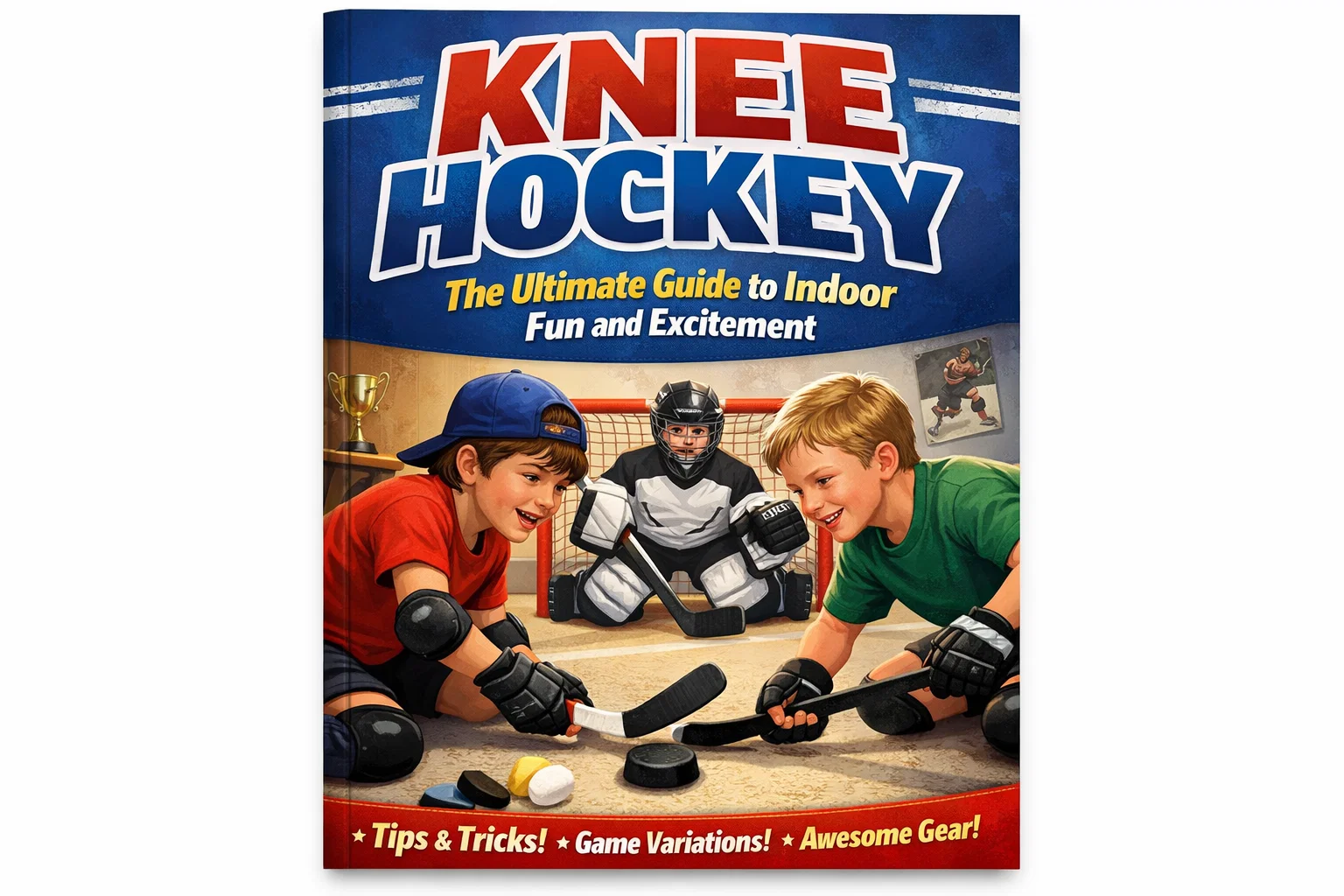
Have you ever wanted to experience the rush of hockey without stepping onto the ice? That’s where knee hockey comes in – a fast-paced, accessible version of the sport that’s perfect for living rooms, basements, or even hallways. Knee hockey, also known as mini hockey or mini sticks, lets players of all ages get in on the action by scooting around on their knees, wielding small sticks, and aiming for tiny goals. It’s not just a game; it’s a way to build skills, stay active, and create lasting memories with friends and family.
What makes knee hockey so appealing is its simplicity. You don’t need expensive equipment or a massive rink – just some space, basic gear, and a competitive spirit. Whether you’re a kid dreaming of NHL glory or an adult reliving childhood basement battles, knee hockey offers endless entertainment. In this comprehensive guide, we’ll explore everything from its origins to advanced tips, helping you dive headfirst into this beloved pastime. Get ready to lace up (or kneel down) and discover why knee hockey is capturing hearts worldwide.
What is Knee Hockey?
Knee hockey is essentially a scaled-down version of ice hockey, played indoors on your knees to simulate the low-to-the-ground action of the real thing. Players use miniature sticks, often made of plastic or wood, to control a foam ball or soft puck, shooting it into small nets. The game emphasizes quick reflexes, strategy, and teamwork, much like traditional hockey, but without the skates or ice.
Unlike full-sized hockey, knee hockey is designed for tight spaces, making it ideal for home play. It’s popular among kids for its fun factor and among adults for nostalgic tournaments. Related terms like floor hockey or indoor hockey often overlap, but knee hockey specifically involves kneeling to keep things fair and intense. This setup prevents players from towering over each other, focusing the game on skill rather than height.
One of the best parts about knee hockey is its inclusivity. Anyone can join in, regardless of athletic background. Families use it as a bonding activity, while serious enthusiasts organize leagues with custom rules. It’s a gateway to understanding hockey fundamentals, like passing and shooting, in a low-pressure environment.
The History of Knee Hockey
The roots of knee hockey trace back to the early days of hockey itself, evolving from makeshift games kids played in homes during harsh winters. In the 1930s, mini sticks began appearing as promotional items for NHL teams, allowing fans to collect autographs and play casual games. These tiny replicas sparked indoor play, where players would kneel to mimic the ice-level perspective, giving birth to what we now call knee hockey.
By the 1960s, as hockey’s popularity surged in North America, knee hockey became a staple in basements and rec rooms. Brands like Bauer and CCM started producing dedicated mini equipment, turning it from a DIY activity into a marketed sport. In Canada and the U.S., it was a way for young aspiring players to practice year-round, honing skills without access to rinks. Stories from former pros, like those who grew up in snowy regions, often include tales of hallway knee hockey battles that built their love for the game.
Over the decades, knee hockey has grown beyond homes. In the 1980s and 1990s, it inspired variations like Australia’s “minkey” for school kids, emphasizing safety and fun. Today, with YouTube channels hosting virtual tournaments, knee hockey has a global following. It’s not just child’s play; adult leagues and charity events keep the tradition alive, blending nostalgia with competition.
The evolution reflects broader hockey trends, from wooden sticks to high-tech composites even in mini forms. What started as simple fun has become a cultural phenomenon, proving that great things come in small packages.
Essential Equipment for Knee Hockey
Getting started with knee hockey doesn’t require a fortune, but the right gear enhances the experience and ensures safety. At its core, you’ll need mini sticks, a ball or puck, and goals. Mini sticks are short, curved replicas of full-sized hockey sticks, typically 18-24 inches long, made from durable plastic to withstand indoor abuse. Brands like Franklin and Bauer offer sets with team logos for that authentic feel.
Goals are crucial – small, foldable nets about 2 feet wide provide the perfect target. Foam balls or soft pucks are ideal, as they bounce well on carpet or tile without damaging walls. For added protection, knee pads prevent bruises from constant kneeling, while gloves can guard hands during intense plays.
To help you choose, here’s a handy table comparing popular knee hockey equipment options:
| Equipment Type | Brand Example | Key Features | Price Range | Best For |
|---|---|---|---|---|
| Mini Sticks | Bauer Mystery Mini | Curved blade, lightweight plastic | $10-20 | Beginners and kids |
| Goals | Franklin NHL Mini | Collapsible, metal frame | $20-40 | Home setups |
| Balls/Pucks | A&R Foam Balls | Soft, high-bounce | $5-10 (pack) | Indoor safety |
| Knee Pads | Winwell Basic | Cushioned, adjustable | $15-25 | Long sessions |
| Full Sets | CCM Knee Hockey Kit | Includes sticks, goal, ball | $30-50 | Complete starters |
This gear keeps things affordable and fun. As you advance, consider upgrades like custom sticks for better grip or reinforced goals for tournaments.
Investing in quality equipment means fewer replacements and more playtime. Many players start with basic sets and build from there, customizing as their passion grows.
How to Play Knee Hockey: Rules and Basics
Playing knee hockey is straightforward, but mastering the rules adds structure and excitement. The game mimics ice hockey: two teams, usually 2-4 players each, face off to score by getting the ball into the opponent’s net. All players must stay on their knees – no standing allowed – to keep it fair. Games last 10-15 minutes or until a set score, like first to 5 goals.
Basic rules include no high-sticking (sticks can’t go above waist height), no body checking or pushing, and offside calls if you enter the opponent’s zone before the ball. Face-offs start play after goals or stoppages, and goalies can use hands but must stay near their net. Penalties for rough play might mean sitting out a minute, adding strategy.
For beginners, focus on passing and positioning. Advanced play involves dekes (fakes) and quick shots. Variations allow for one-knee slides or no-goalies for chaos. Always agree on house rules upfront to avoid disputes.
Knee hockey builds real hockey skills like hand-eye coordination and teamwork. It’s forgiving for newbies but challenging for vets, making it endlessly replayable.
Setting Up Your Knee Hockey Rink at Home
Transforming your home into a knee hockey arena is easier than you think. Start with a clear space – a 10×15 foot area in a basement or living room works best. Use tape or rugs to mark boundaries, creating a rectangular rink with center and goal lines for authenticity.
For boards, DIY options shine: stack books or use foam pool noodles as barriers to keep the ball in play. Mini goals at each end complete the setup. Lighting matters – ensure the area is well-lit to avoid accidents.
Customize for fun: add team banners or scoreboards from cardboard. For larger groups, expand to full-room rinks with zones. Safety first – move furniture and pad sharp corners.
This home setup fosters creativity and turns rainy days into epic battles. Many families make it a tradition, evolving their rinks over time.
Benefits of Playing Knee Hockey
Knee hockey isn’t just entertainment; it packs health and developmental perks. Physically, it boosts cardio from constant movement, strengthening legs, core, and arms. Kneeling improves balance and flexibility, while quick maneuvers enhance agility – skills transferable to other sports.
Mentally, it sharpens focus and strategy, teaching quick decisions under pressure. For kids, it promotes teamwork and sportsmanship, building confidence. Adults enjoy stress relief and social bonding, turning game nights into highlights.
As a low-impact activity, it’s safer than full hockey, reducing injury risk while keeping you active indoors. Studies on similar games show improved coordination and even better mood from play.
Overall, knee hockey fosters a love for movement, making fitness fun without feeling like a chore.
Knee Hockey Variations and Fun Twists
Knee hockey’s versatility allows for creative spins. One popular variation is “no-goalies,” where everyone attacks, leading to high-scoring chaos. Another is “power play” modes, giving advantages like extra players for penalties.
Outdoor adaptations use grass or driveways, swapping knees for standing mini sticks – called shinny in some regions. Themed games, like NHL team simulations, add flair with jerseys.
For skill-building, try one-handed play or backward skating (scooting). Tournament formats with brackets elevate casual fun to competitive events.
These twists keep knee hockey fresh, appealing to all skill levels and groups.
Famous Knee Hockey Moments and Players
While knee hockey lacks pro leagues, it has iconic moments from viral videos and celebrity play. YouTube channels like QuinnBoysTV host elaborate tournaments simulating NHL matchups, with dramatic goals and replays captivating thousands.
NHL stars like Patrick Kane credit knee hockey for early skill development, saying it honed their puck control. “Knee hockey in the basement taught me to think fast,” Kane once shared in an interview.
Amateur “pros” like those in NKHL finals gain fame through online highlights, inspiring fans. Charity events featuring ex-players add star power.
These stories highlight knee hockey’s role in nurturing talent and creating community legends.
Tips and Tricks for Mastering Knee Hockey
To dominate knee hockey, start with basics: keep your stick low for better control and quick passes. Practice dekes – fake shots to fool defenders – using the “shoe” trick, where you pretend to tie your laces mid-play.
Positioning is key; stay spread out to create openings. For shooting, aim low and use wrist snaps for accuracy. Defense? Block passing lanes without fouling.
Advanced tips include knee slides for saves and quick pivots. Watch pro hockey for inspiration, adapting moves to mini scale.
Consistent practice turns novices into aces, making every game thrilling.
Knee Hockey for Kids: Why It’s Great for Young Players
Knee hockey is a kid’s dream, blending fun with learning. It introduces hockey basics safely, building motor skills and coordination without ice risks. Kids learn teamwork, sharing, and resilience from wins and losses.
Physically, it encourages activity, combating screen time. Parents love its affordability and indoor convenience. “It’s how my son fell in love with sports,” one mom quipped.
Educational twists, like rule discussions, teach fairness. Overall, it’s a gateway to lifelong fitness and friendships.
Adult Knee Hockey Leagues and Tournaments
Adults are rediscovering knee hockey through organized leagues and events. Local rec centers host tournaments, with brackets and prizes drawing crowds. Online communities coordinate virtual or in-person meets.
Charity fundraisers feature knee hockey, blending competition with good causes. “It’s like reliving childhood, but with beer,” joked a participant.
These gatherings build camaraderie, offering low-stakes thrills for busy adults.
Safety Tips for Knee Hockey
Safety ensures knee hockey stays enjoyable. Always wear knee pads to cushion falls, and gloves for hand protection. Keep sticks below waist to avoid face hits.
Clear the play area of obstacles, and enforce no-pushing rules. Hydrate and take breaks to prevent fatigue. For kids, supervise to teach proper play.
These precautions minimize bruises, keeping the focus on fun.
Where to Buy Knee Hockey Gear
Finding knee hockey gear is simple with online and local options. Sites like Amazon and Pure Hockey offer wide selections, from basic sets to pro-level minis. Sporting goods stores like Dick’s carry brands like Warrior.
Look for sales during holidays for deals. Specialty hockey shops provide expert advice.
Quality gear lasts longer, enhancing your games.
DIY Knee Hockey Equipment Ideas
Get creative with DIY knee hockey gear to save money. For sticks, cut broom handles and attach curved plastic from bottles. Goals? Use PVC pipes and netting from old screens.
Rinks from cardboard boxes or tape lines add structure. Foam balls from craft stores work as pucks.
These hacks personalize play, sparking innovation.
Conclusion
Knee hockey captures the essence of hockey in a compact, joyful package. From its humble history to modern twists, it offers endless benefits – physical, social, and fun. Whether setting up a home rink, mastering tricks, or joining a tournament, knee hockey brings people together. So grab your mini stick, kneel down, and let the games begin. Who knows? Your next epic goal could be just a scoot away.
FAQ
What is Knee Hockey?
Knee hockey is a mini version of ice hockey played indoors on your knees, using small sticks and foam balls. It’s great for all ages and builds skills in a fun way.
Knee hockey promotes activity without needing ice, making it accessible. Rules are simple, similar to hockey, with no standing allowed for fairness.
How Do You Set Up a Knee Hockey Game at Home?
Clear a space and mark boundaries with tape. Use mini goals and sticks – DIY options work too.
Gather friends, agree on rules, and start with a face-off. It’s quick to set up and endlessly entertaining.
What Equipment Do You Need for Knee Hockey?
Basic needs: mini sticks, foam ball, and goals. Add knee pads for safety.
Full sets are affordable, or make your own for customization.
Is Knee Hockey Safe for Kids?
Yes, with proper supervision and gear like pads. Low impact reduces risks.
It teaches sportsmanship while keeping things light-hearted.
Can Adults Play Knee Hockey Competitively?
Absolutely – leagues and tournaments exist, often for fun or charity.
It reignites childhood joy with adult twists.
