


Have you ever found yourself in a conversation or situation where you desperately needed to know today’s date in spanish but felt a bit lost? You’re not alone. Millions of people around the world search for this exact information every day, whether they’re traveling through vibrant cities in Latin America, preparing for a video call with colleagues in Spain, or simply trying to keep their language learning on track. Knowing today’s date in spanish opens doors to smoother interactions and a deeper appreciation for the rich tapestry of Hispanic culture.
In our fast-paced global society, dates are more than just numbers on a calendar. They mark appointments, celebrations, deadlines, and milestones. When you can seamlessly switch to expressing today’s date in spanish, you demonstrate respect for the language and its speakers. This guide is designed to be your go-to resource, packed with practical examples, cultural context, and expert tips that make learning feel natural and enjoyable rather than like a chore.
Think about it: imagine landing in Mexico City and confidently telling your taxi driver the exact date for your hotel reservation. Or chatting with a friend in Colombia about upcoming holidays without hesitation. These small moments build confidence and create memorable connections. We’ll walk through every angle so that by the end, you’ll not only know today’s date in spanish but understand why and how it works across different contexts. The Spanish language is spoken by over 500 million people worldwide, and mastering something as fundamental as dates gives you a real edge in communication.
What makes this topic so fascinating is the blend of simplicity and subtlety. Spanish date expressions follow logical patterns rooted in history, yet they carry unique flavors depending on the region. Whether you’re a complete beginner or someone brushing up on skills, this in-depth look will provide value that lasts far beyond today. We’ll cover everything from basic structures to advanced nuances, ensuring the content is engaging and easy to absorb.
Why Learning Today’s Date in Spanish Matters More Than Ever in Our Connected World
In an era where international travel, remote work, and cross-cultural friendships are the norm, being able to state today’s date in spanish fluently can make all the difference. It shows cultural awareness and helps avoid awkward misunderstandings that might arise from mismatched date formats between English and Spanish conventions. For instance, while many English speakers default to month-day-year, Spanish speakers prioritize day-month-year, a small shift that prevents confusion in scheduling.
Beyond practicality, there’s a deeper satisfaction in connecting with the language on its own terms. When you learn to express today’s date in spanish, you’re tapping into the rhythm of daily life in Spanish-speaking communities. Families in Spain might discuss “el 19 de febrero” while planning a weekend getaway, and the same phrase echoes in homes across Argentina or Peru with slight regional intonations that add charm. This knowledge enriches your experiences, whether browsing local markets or reading news headlines.
Moreover, in professional settings, accuracy with dates builds credibility. A business proposal with correctly formatted Spanish dates signals attention to detail. Students studying abroad or immigrants integrating into new communities find that mastering this element speeds up adaptation. The casual yet precise nature of Spanish date talk makes conversations flow naturally, turning potential language barriers into opportunities for laughter and learning. As you progress through this guide, you’ll see how today’s date in spanish fits into bigger pictures like holiday planning and historical reflections.
The global influence of Spanish continues to grow, with media, music, and cuisine spreading its reach. Investing time in fundamentals like dates pays dividends in confidence and competence. Readers often share stories of how a simple correct date reference sparked friendships or closed deals. This section alone highlights the transformative power of such knowledge, setting the stage for the detailed breakdowns ahead.
Discovering the Exact Way to Say Today’s Date in Spanish Right Now
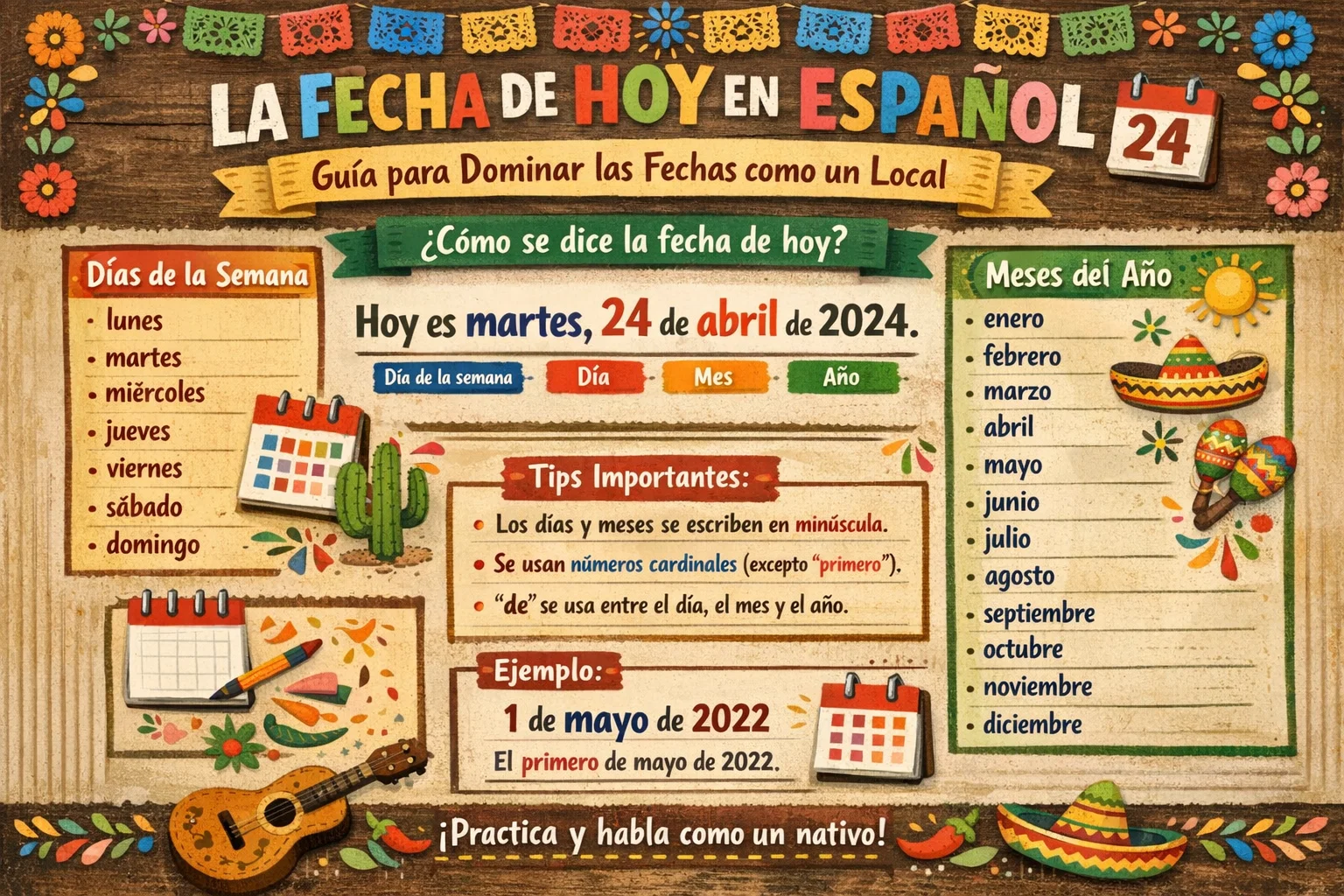
As of February 19, 2026, which falls on a Thursday, today’s date in spanish is expressed as “el 19 de febrero de 2026” or more conversationally “hoy es jueves, 19 de febrero de 2026.” This full phrasing rolls off the tongue naturally once you get the hang of it. The structure places the day first, followed by the month, and then the year, all connected with the preposition “de” for smoothness.
To make it even more natural, many speakers start with “hoy es” meaning “today is,” then add the day of the week if relevant. So you might hear or say “Hoy es jueves, el 19 de febrero de 2026.” Notice how “el” precedes the number in formal or written contexts but can sometimes be omitted in casual speech. This flexibility keeps the language lively and adaptable to different situations.
Pronunciation plays a key role in sounding authentic. “Febrero” is pronounced roughly as “feh-BREH-ro,” with the stress on the second syllable. The year “dos mil veintiséis” breaks down as “dohs meel vayn-tee-SAYS.” Practicing these aloud helps embed them in memory. If someone asks “¿Cuál es la fecha de hoy?” you can respond confidently with the full date, impressing listeners with your command of the language.
Variations exist for brevity. In quick notes or digital messages, you might see “19/02/2026” following the day-month-year order common throughout most Spanish-speaking regions. Understanding these layers ensures you can adapt whether chatting informally or writing formally. Exploring today’s date in spanish this way reveals the elegance of the system’s consistency across continents.
The Standard Structure for Writing and Saying Dates in Spanish
Spanish date construction follows a predictable pattern that prioritizes clarity and tradition. You begin with the day of the month as a cardinal number, except for the first, which often uses “primero.” Then comes “de,” the month name in lowercase unless starting a sentence, another “de,” and finally the year. This ascending order contrasts with some English habits but feels intuitive once practiced.
For example, instead of saying “February 19, 2026,” a Spanish speaker would convey the equivalent as “19 de febrero de 2026.” When including the weekday, it slots in naturally: “jueves, 19 de febrero de 2026.” Capitalization rules are straightforward — months and days are not capitalized unless they begin a sentence or appear in titles.
This structure appears in official documents, newspapers, and personal correspondence alike. The Real Academia Española recommends it for consistency across all Spanish variants, promoting unity among diverse speakers. In practice, you’ll encounter it everywhere from train tickets in Barcelona to event posters in Santiago.
Breaking it further, numbers from one to thirty-one have specific Spanish terms that pair seamlessly with months. Learning these builds a strong foundation. The preposition “de” acts like glue, linking elements gracefully without clutter. Mastering this core framework lets you generate any date on the fly, making today’s date in spanish just one application of a versatile skill set.
Pronouncing Dates in Spanish with Natural Fluency and Accent
Getting the sounds right elevates your date expressions from textbook to conversational. Spanish pronunciation is phonetic, so once you know the rules, reading dates aloud becomes straightforward. For February 19, 2026, practice “el diecinueve de febrero de dos mil veintiséis” with rolled “r” in “febrero” and clear vowel separation.
Days of the week and months carry melodic rhythms. “Jueves” sounds like “HWEH-ves,” with the “j” as a soft “h.” Years in the 2000s start with “dos mil” followed by the remaining digits as a single number, avoiding the English tendency to split into “twenty” something. This prevents common pitfalls that mark non-native speech.
Listening to native podcasts or videos helps internalize intonation. In many regions, speakers slightly raise pitch on the day and month for emphasis. Regional accents add flavor — Caribbean Spanish might soften consonants, while Castilian Spanish keeps them crisp. Experimenting with these variations makes practicing today’s date in spanish enjoyable and culturally immersive.
Recording yourself and comparing to native examples accelerates improvement. Focus on linking words smoothly: “de febrero” flows as one unit. With regular practice, pronouncing any date becomes second nature, enhancing both speaking and listening comprehension in real-world scenarios.
Regional Variations When Expressing Today’s Date Across Spanish-Speaking Countries
While the core formula remains consistent, subtle preferences emerge across regions. In Spain, formal settings favor the full “el 19 de febrero de 2026” with clear enunciation. Latin American countries like Mexico or Argentina might lean toward casual shortenings in speech, such as “hoy estamos a 19 de febrero,” a popular idiomatic way to ask and answer about the date.
In some Andean regions, speakers incorporate more local slang around time references, but the date itself stays standard. Numeric formats universally follow day/month/year, so 19/02/2026 avoids the confusion Americans might face with 02/19/2026. This shared convention fosters easy understanding whether you’re in Madrid or Montevideo.
Chile and Peru might emphasize the weekday more in daily talk, while Central American nations keep responses concise. These differences enrich the language without complicating the basics. Travelers quickly adapt by observing local media or conversations. No matter the country, the phrase for today’s date in spanish remains recognizable and effective.
Exploring these nuances deepens appreciation for Spanish as a living, breathing entity shaped by history and geography. It explains why one expression might feel warmer in one place than another, adding layers to your linguistic journey.
The Rich History Behind the Spanish Calendar and Date System
The modern Spanish calendar traces roots to the Roman Julian system, later refined by the Gregorian reform in 1582, which Spain adopted promptly under Philip II. This historical shift influenced how dates are structured and named, embedding Latin legacies into everyday use. Understanding this background makes learning today’s date in spanish more meaningful.
Months derive from ancient deities and numerals. The system survived conquests and evolutions, spreading across the Spanish Empire. Indigenous cultures in the Americas blended some traditions, yet the European framework dominated written records. Today, this history surfaces in festivals tied to specific dates, reminding us that calendars mark not just time but shared heritage.
Scholars note how the Gregorian adjustment corrected seasonal drift, ensuring accurate agricultural and religious observances. Spanish literature from the Golden Age frequently references dates, offering windows into past mindsets. This historical lens transforms rote memorization into a story of human ingenuity and cultural exchange.
Month by Month Exploration of Spanish Names and Their Captivating Origins
Each Spanish month carries echoes of Roman mythology and ancient customs, providing endless fascination. Enero honors Janus, the two-faced god looking to past and future, symbolizing new beginnings perfect for the year’s start. Febrero stems from “februa,” purification rites involving rituals to cleanse the community, explaining its association with renewal despite being short.
Marzo pays tribute to Mars, god of war, as the original first month in early Roman calendars when campaigns launched. Abril’s origins spark debate, possibly linked to “aperire” meaning to open, as flowers bloom, or to Aphrodite. Mayo likely derives from Maia, goddess of growth, tying into spring fertility.
Junio references Juno, protector of marriage and women. Julio was renamed for Julius Caesar after his reforms, while Agosto honors Augustus for similar reasons. Septiembre, Octubre, Noviembre, and Diciembre reflect their original positions as seventh through tenth months before January and February were added, a numerical reminder of calendar evolution.
These etymologies enrich conversations. When stating today’s date in spanish during February, mentioning its purification roots can spark interesting discussions. Each name weaves history into daily life, making the language poetic and profound. Delving into these stories turns learning months into an adventure rather than a list.
Further, cultural associations amplify meaning. In many places, March brings thoughts of spring festivals, while December evokes holiday warmth. This month-by-month awareness helps contextualize dates beyond mechanics, fostering genuine engagement with Spanish speakers.
Days of the Week Integrated Seamlessly with Spanish Dates
Spanish weekdays also trace to planetary and divine influences, complementing date expressions beautifully. Lunes from Luna the moon, martes from Mars, and so on through domingo for the Lord. When combining with dates, the flow feels organic: “jueves, 19 de febrero.”
This integration allows versatile phrasing. You can focus on the weekday for casual plans or the full date for precision. Regional nicknames or shortenings appear occasionally, but standards prevail in most written forms. Mastering both elements lets you handle any temporal reference with ease.
Common Questions and Phrases for Asking About Today’s Date in Spanish
Everyday interactions often begin with “¿Cuál es la fecha de hoy?” or the more colloquial “¿A cuántos estamos hoy?” These open doors to natural replies including today’s date in spanish. Responding with “Estamos a 19 de febrero” fits relaxed settings perfectly.
Other useful phrases include “¿Qué día es hoy?” which might elicit just the weekday, but expanding to the full date demonstrates fuller command. In service contexts like hotels or banks, formal versions ensure clarity. Practicing these builds conversational agility that extends to all topics.
Numerical and Abbreviated Date Formats Used in Spanish Contexts
While words provide elegance, numbers offer speed. The preferred numeric style is 19/02/2026 or 19-02-2026, always day first. This avoids international mix-ups common in global correspondence. Official documents may spell everything out for legal precision.
In digital calendars or apps popular in Spanish regions, formats align with local norms, reinforcing consistency. Learning both verbal and numeric versions prepares you for any medium.
Frequent Pitfalls English Speakers Encounter with Spanish Dates and Easy Fixes
Many stumble by reversing month and day or pronouncing years incorrectly as “twenty twenty-six” instead of “dos mil veintiséis.” Forgetting “de” creates choppy sentences. The fix is simple repetition and comparison exercises.
Another issue is capitalizing months unnecessarily or using ordinals except for “primero.” Awareness and targeted practice eliminate these quickly, turning potential embarrassment into expertise.
Weaving Today’s Date in Spanish into Casual and Everyday Conversations
Imagine greeting a neighbor: “¡Hola! Hoy es jueves, 19 de febrero de 2026. ¿Qué planes tienes?” Such integration makes interactions warmer. Stories, appointments, and memories all benefit from accurate date references that feel native.
Cultural Celebrations Where Dates Hold Special Meaning in Hispanic Traditions
From Día de los Muertos on November 1-2 to Independence days clustered in September, dates anchor vibrant events. Epiphany on January 6 features gift-giving in Spain. These occasions highlight how dates transcend functionality to embody community and heritage.
Formal and Professional Applications of Spanish Date Usage
Contracts, invoices, and reports demand precision. Using “19 de febrero de 2026” ensures compliance and professionalism. In diplomacy or education, mastery signals competence.
Quote: “El tiempo es el mejor maestro, pero cobra caro por las lecciones.” – A popular Spanish proverb reflecting on the value of dates and time.
Effective Strategies for Language Learners to Internalize Spanish Dates
Flashcards pairing numbers with months, daily journaling with dates, and immersion through Spanish media accelerate mastery. Linking personal events to Spanish phrasing creates emotional anchors.
Leveraging Apps and Digital Resources for Instant Date References in Spanish
Modern tools translate and vocalize dates effortlessly, supplementing but not replacing understanding. Voice assistants handle queries like “what is today’s date in spanish” reliably.
Interesting Trivia and Lesser-Known Facts About Spanish Dates and Calendars
Did you know the Gregorian calendar’s adoption prevented date skips in Spanish territories? Or that some indigenous groups maintained parallel systems? Such facts add depth.
Side-by-Side Comparison of English and Spanish Date Conventions
English often leads with the month, creating potential ambiguity resolved in Spanish by strict day-first order. Year pronunciation differs markedly, as noted earlier.
Anecdotal Insights from Real Experiences Learning to Use Dates in Spanish Abroad
Picture arriving in Seville on a crisp February day and confidently booking a tour for “el 19 de febrero.” Such moments turn travelers into participants. Detailed stories of navigating airports, markets, and festivals using precise dates illustrate practical triumphs and humorous mishaps that ultimately build skill.
One vivid memory involves a market vendor in Granada correcting a date reference gently, leading to a longer chat about local customs. Another features sealing a volunteer project in Peru by citing the exact date in flawless Spanish, earning immediate rapport. These personal touches show how today’s date in spanish transforms routine into connection.
Expanding on travel scenarios, consider coordinating group tours where misstated dates could derail plans. Or romantic dinners where knowing the anniversary date in the partner’s language sparks joy. The cumulative effect of consistent practice yields compounding benefits in confidence and cultural empathy.
Emerging Trends in How Multilingual Environments Handle Date Expressions
With globalization, hybrid formats appear in international apps, yet Spanish standards hold strong. Future language AI may offer real-time cultural adaptations, but foundational knowledge remains irreplaceable.
Conclusion
Wrapping up this extensive journey, mastering today’s date in spanish equips you with a practical, culturally rich skill that enhances every interaction in Spanish-speaking worlds. From the structured elegance of “el 19 de febrero de 2026” to the warm flow of casual phrases, dates serve as gateways to connection, precision, and enjoyment. Whether for travel, work, or personal growth, the insights shared here provide a solid foundation you can build upon daily. Embrace the language’s rhythms, practice consistently, and watch opportunities unfold. Today’s date in spanish is more than words on a calendar — it’s an invitation to engage more fully with millions of vibrant voices worldwide. Keep exploring, and let each new date mark progress in your linguistic adventure.
FAQ
What is today’s date in spanish as of February 19, 2026?
As of this moment on February 19, 2026, today’s date in spanish is “el 19 de febrero de 2026” or conversationally “hoy es jueves, 19 de febrero de 2026.” This follows the standard day-month-year structure used across Spanish-speaking regions, ensuring clarity whether spoken or written.
How do you ask for today’s date in Spanish naturally?
Common ways include “¿Cuál es la fecha de hoy?” or the relaxed “¿A cuántos estamos hoy?” Both prompt responses featuring today’s date in spanish, allowing seamless integration into chats without sounding stiff.
What are the main differences between English and Spanish date formats?
Spanish places the day before the month and uses “de” connectors, contrasting English’s frequent month-first approach. Numeric versions also follow DD/MM/YYYY, reducing mix-ups in international settings when you know today’s date in spanish conventions.
Can I use numbers only when writing today’s date in spanish?
Yes, “19/02/2026” or “19-02-2026” works perfectly in most contexts, always observing day-month-year order. This abbreviated style appears in forms, tickets, and digital communication throughout Spain and Latin America.
Why is it important to include the year when saying today’s date in spanish?
Including the full year avoids ambiguity, especially near year changes or in formal records. It completes the expression accurately, as in “19 de febrero de 2026,” making your command of today’s date in spanish more professional and precise.
